What European jet cards publish in 2026
Few European providers publish rates at all. Luxaviation ONE is an exception: its Classic card lists fixed hourly rates within the EU of €7,750 to €9,500 for a light jet, €10,500 to €11,750 for a midsize, €12,500 to €14,500 for a super midsize, €15,000 to €16,000 for a heavy jet and €18,000 to €19,500 for ultra long range. The conditions sit next to the prices: a 25-hour minimum commitment, non-refundable, 72 hours’ notice, and taxes and additional operational fees not included. In its favour, the same page lists no positioning or ferry costs and no expiry on flight hours.
Others publish the structure rather than the price. Flexjet describes an initial deposit equal to the prepaid base hours multiplied by the hourly rate of the primary aircraft type, with a fuel component adjustment added to the base rate each month. When it restarted its European card in 2024, Private Jet Card Comparisons reported a Praetor 600 card from 25 hours, guaranteed on a 24-hour non-peak callout, with a 60-minute daily minimum, 10 blackout dates and 25 peak days. VistaJet sells membership by annual hours: VJ25 for 25 to 49 hours a year, with guaranteed availability on all non-peak and most peak days, and the Program for 50 hours or more. Unpublished prices are normal at this end of the market. That makes the terms below more important, because they are the only part you can compare before asking for a proposal.
How European rates compare with the North American benchmark
The most-cited jet card index is North American. Private Jet Card Comparisons, whose database covers more than 80 providers and over 1,000 options, put overall jet card rates at $10,958 per hour at the end of Q3 2026, down 3.1% on the quarter and 23.7% above pre-COVID Q4 2019. By category it lists light jets at $8,333, midsize at $9,607, super midsize at $12,485 and large cabin at $14,791 per hour, figures that include the base rate, fuel surcharges and 7.5% Federal Excise Tax.
I would not convert those figures and lay them next to the Luxaviation bands as if they were the same product. One is a dollar average of published US programmes with US tax inside; the other is a euro band for flights within the EU with taxes outside. What the comparison does show is the shape. In both markets each step up in cabin carries a predictable premium per hour, and in both the headline rate is the least informative number on the page.
Card rate versus charter rate in Europe
For a European flyer, the more useful comparison is with charter. Jet Supply’s European Private Jet Charter Price Index, in its Q4 2026 edition, carries forward the Q3 bands: €4,700 to €7,500 per block hour for a light jet (mid-band €6,100), €8,900 to €15,300 for a super midsize (mid-band €12,100) and €14,300 to €22,500 for ultra long range (mid-band €18,400), all-in for aircraft, crew, fuel, standard handling and standard catering.
By my arithmetic, the midpoint of Luxaviation’s light-jet card band, €8,625, is about 41% above Jet Supply’s light-jet charter mid-band. At super midsize the gap narrows: the card band’s midpoint of €13,500 is about 12% above the €12,100 charter mid-band. At ultra long range the two midpoints, €18,750 and €18,400, are within 2% of each other. The card premium is concentrated at the small end of the market, exactly where European flying is busiest.
That premium is not a mark-up for nothing. A charter index is a from-price that moves with date, availability and positioning; the card fixes the rate, guarantees the category and, in Luxaviation’s case, carries no positioning cost. What you buy with the premium is certainty on the days when charter is scarce and expensive. If most of your flying is on ordinary weekdays from a well-served airport, you are paying for insurance you rarely claim. For how positioning drives the charter side, see repositioning economics.
The daily minimum: where short hops get expensive
The daily minimum is the line that most changes the real price in Europe, where so many sectors are short. It is the least flight time the provider bills per flying day, whatever you actually fly. Private Jet Card Comparisons found that the average daily minimum rose to 95.0 minutes in Q3 2026, against 86.2 minutes before COVID, with light jets at 78.9 minutes, up from 72.8 the quarter before. Flexjet’s European card was reported with a 60-minute daily minimum.
The arithmetic is simple and unforgiving. London to Paris is a 52-minute block. Under a 60-minute minimum you pay for 60 minutes, about 15% more than the time flown. Under a 95-minute minimum you pay for 95, about 83% more. A card with a lower rate and a longer minimum can cost more on the first short hop than a card with a higher rate and a shorter one. Charter has its own version: Jet Supply bills a minimum of 1.5 block hours, which is why sub-one-hour hops cost roughly twice as much per kilometre as mid-length sectors. If your year is a series of 50-minute hops, ask for the daily minimum before you ask for the rate.
Peak days, callouts and the calendar
The second hidden variable is the calendar. Private Jet Card Comparisons counted an average of 45.3 peak days in Q3 2026, almost double the 22.8 days of Q4 2019, and notes that peak days typically bring surcharges, longer callouts, longer cancellation deadlines and departure shifts of as much as four hours either way. The ordinary notice period has lengthened too: an average non-peak callout of 64.8 hours, against 23.2 hours before COVID.
European terms vary just as widely. PrivateFly’s Aviator card was reported in 2024 with a 20% surcharge on 35 peak days, waived if you book at least 14 days ahead. Luxaviation’s Classic card requires 72 hours’ notice. VistaJet’s Program has no peak days and guarantees a flight every day of the year, with as little as 24 hours’ notice. The peak list matters most for the flying that prompts people to buy a card in the first place: ski weekends, the big summer events, the start of the holidays. Read the list against your own diary. If half your planned flights fall on the provider’s peak days, the fixed rate applies only to the other half. I set out how peak events strain capacity in managing peak-event charter demand.
What sits outside the rate
Then there is what the hourly rate excludes. Luxaviation states plainly that taxes and additional operational fees are not included. Flexjet adds a fuel component adjustment to the base hourly rate for monthly fluctuations in the cost of fuel. The US index, by contrast, already includes fuel surcharges and 7.5% Federal Excise Tax, one more reason not to compare it directly with European cards.
In Europe, passenger taxes are the largest exclusion, and they ignore the card entirely. France charges €420 per passenger on a business jet to a destination in France or Europe, per departure. By my arithmetic, six passengers leaving Nice pay €2,520 in that tax alone, whatever hourly rate they prepaid. On the charter side, Jet Supply’s index likewise excludes de-icing, special catering and peak-date surcharges; ask whether a card treats them any differently. I go through the country rates in private jet taxes in Europe, and the same reading discipline applies as in all-in price versus hourly rate: ask for every line that can be added, and how it is charged.
Commitment, expiry and refunds
A card is prepaid, so the terms on unused money are part of the price, and they differ more than the rates. Luxaviation’s Classic card is non-refundable, with no expiry on flight hours, while its Premium card takes a fully refundable deposit from €50,000 and prices each flight at the market rate: refundability, bought at the cost of a fixed rate. Flexjet’s European card was reported as valid for 12 months, with unused funds rolled into a new card. VistaJet lets VJ25 members request to roll over up to 20% of their flying hours to the following year. PrivateFly’s Aviator was reported with funds that never expire but are non-refundable, from a $200,000 entry point.
My rule is to assume a client will use 80% of the hours bought and to see whether the card still beats charter on that basis. If it only works at full utilisation, it is a bet on the diary, not a price advantage. Programmes also change: in Q3 2026 alone, Private Jet Card Comparisons recorded OneFlight’s exit and PlaneSense halting sales of its PC-12 jet card in North America. A card is a prepayment to one company, so I want to know the contracting entity and where the money sits before a client wires it. Europe’s market is fragmented: Avi-Go found that the ten largest European operators held a combined 32.43% share in June 2026, with NetJets Europe the leader. Most providers are small, and their financial strength deserves the same scrutiny as their rate card.
How I work out what a card really costs
When a client sends me a jet card proposal, I turn it into an effective hourly cost with six questions:
- Rate and category. Which aircraft types are guaranteed, and is the rate fixed, capped or adjusted for fuel each month?
- Daily minimum. What is billed on a day with one 50-minute hop? Multiply that through your typical sectors.
- Peak days and callout. How many peak or blackout days, what surcharge applies and how much notice is needed? Lay the list over last year’s flights.
- Exclusions. Taxes, de-icing, catering, crew overnights and positioning outside the service area: which are extra, and at what rate?
- Unused money. Expiry, rollover and refund terms, tested against the share of hours you realistically fly.
- Counterparty. Who holds the deposit, and what happens to it if the provider is sold or stops selling the product?
My view, briefly
A jet card is a reasonable product sold on an incomplete number. The hourly rate is real, but the price of a card is that rate after the daily minimum, the peak calendar, the exclusions and the hours you never fly. In Europe, on the published figures, the card premium over charter is widest in light jets and almost disappears at ultra long range. That tells me where cards make most sense: larger cabins, longer sectors and predictable annual hours. For short, irregular European hops, on-demand charter priced trip by trip is usually the better value. Charter enquiries I take are fulfilled through Limitless Sky, and when a client is weighing a card, the most useful exercise I know is to price last year’s actual trips both ways, so the decision rests on their own flying rather than on a brochure.
Frequently asked questions
How much does a jet card cost in Europe? — Few providers publish prices. Luxaviation ONE lists EU card rates from €7,750–€9,500 per hour for a light jet to €18,000–€19,500 for ultra long range, with a 25-hour minimum commitment; taxes and additional operational fees are extra.
What is a daily minimum on a jet card? — The least flight time billed per flying day. The North American average was 95.0 minutes in Q3 2026; Flexjet’s European card was reported with 60 minutes. On a 52-minute hop, a 95-minute minimum bills about 83% more than the time flown.
Is a jet card cheaper than charter in Europe? — Not on the headline rate. On published figures, the midpoint of a light-jet card band is about 41% above the mid-band of Jet Supply’s charter index; the gap narrows to almost nothing at ultra long range. The card buys a fixed rate and guaranteed availability.
What are peak days on a jet card? — Dates when surcharges, longer notice or no guarantee apply. Private Jet Card Comparisons counted an average of 45.3 peak days in Q3 2026, almost double the 22.8 of Q4 2019.
Do jet card hours expire? — It depends on the programme. Luxaviation’s Classic hours do not expire but are non-refundable; Flexjet’s European card was reported valid for 12 months with rollover into a new card; VistaJet VJ25 members can request to roll over up to 20% of their hours.
Planning a specific journey? Live charter enquiries are handled by Limitless Sky, where the operator, aircraft and terms for your itinerary can be discussed.
Sources & editorial notes
Written by Dr. Christoph Lymbersky as an authored perspective drawing on the public sources below. Sources reviewed 22 October 2026. General editorial guidance, not an individual operating, legal, tax or investment recommendation. Scenarios are labelled illustrative and do not describe real clients. No market-wide prices, statistics or guaranteed aircraft performance are asserted.
- Luxaviation ONE — Private Jet Card (page updated 17 September 2026) ↗
Classic card: fixed hourly rates within the EU of €7,750–9,500 (light), €10,500–11,750 (midsize), €12,500–14,500 (super midsize), €15,000–16,000 (heavy), €18,000–19,500 (ultra long range); 25-hour non-refundable minimum; 72 hours’ notice; taxes and additional operational fees not included; no positioning costs; no expiry. Premium card: refundable deposit from €50,000, market rate per flight, 24 hours’ notice.
- Flexjet Europe — Jet Card Programme ↗
Debit-style card: initial deposit equals prepaid base hours multiplied by the hourly rate of the primary aircraft type; a fuel component adjustment is added to the base hourly rate monthly; designed for about 25 hours a year.
- Private Jet Card Comparisons — Flexjet restarts European jet card (15 March 2024) ↗
Praetor 600 card from 25 hours; 24-hour non-peak callout; 60-minute daily minimum; 10 blackout dates and 25 peak days without guaranteed availability; no summer premium; valid 12 months; unused funds can be rolled into a new card.
- Private Jet Card Comparisons — PrivateFly rebrands jet card under Aviator (March 2024) ↗
European fixed-rate programme: 20% surcharge on 35 peak days, waived when booked at least 14 days ahead; no blackout dates; de-icing included; funds never expire but are non-refundable; entry point $200,000.
- VistaJet — Memberships (VJ25 and VistaJet Program) ↗
VJ25 for 25 to 49 hours a year with guaranteed availability on all non-peak and most peak days; the VistaJet Program for 50+ hours with a fixed hourly rate and guaranteed availability every day of the year.
- VistaJet — Good to Know: membership FAQs ↗
Program membership has no peak days and guarantees a flight every day of the year with as little as 24 hours’ notice; VJ25 members can request to roll over up to 20% of their flying hours to the following year.
- Private Jet Card Comparisons — Q3 2026 jet card prices ↗
Industry tracking of jet card pricing in Q3 2026.
- Jet Supply — European Private Jet Charter Price Index Q4 2026 (October 2026) ↗
Q4 2026 edition carries forward the Q3 bands: all-in per block hour, light jet €4,700–7,500 (mid-band €6,100), super midsize €8,900–15,300 (€12,100), ultra long range €14,300–22,500 (€18,400); 1.5-hour billing minimum; London–Paris 52-minute block from €8,300; excludes de-icing, special catering and peak-date surcharges.
- Service-Public.fr — Billets d’avion : hausse de la taxe de solidarité à partir de mars 2025 ↗
Official French government summary of the 2025 solidarity-tax (TSBA) rates, including business aircraft, under Loi n° 2025-127 de finances pour 2025.
- Avi-Go — Research & Consulting ↗
Avi-Go periodic market research, including January–August 2025 and 2026 monthly European data.
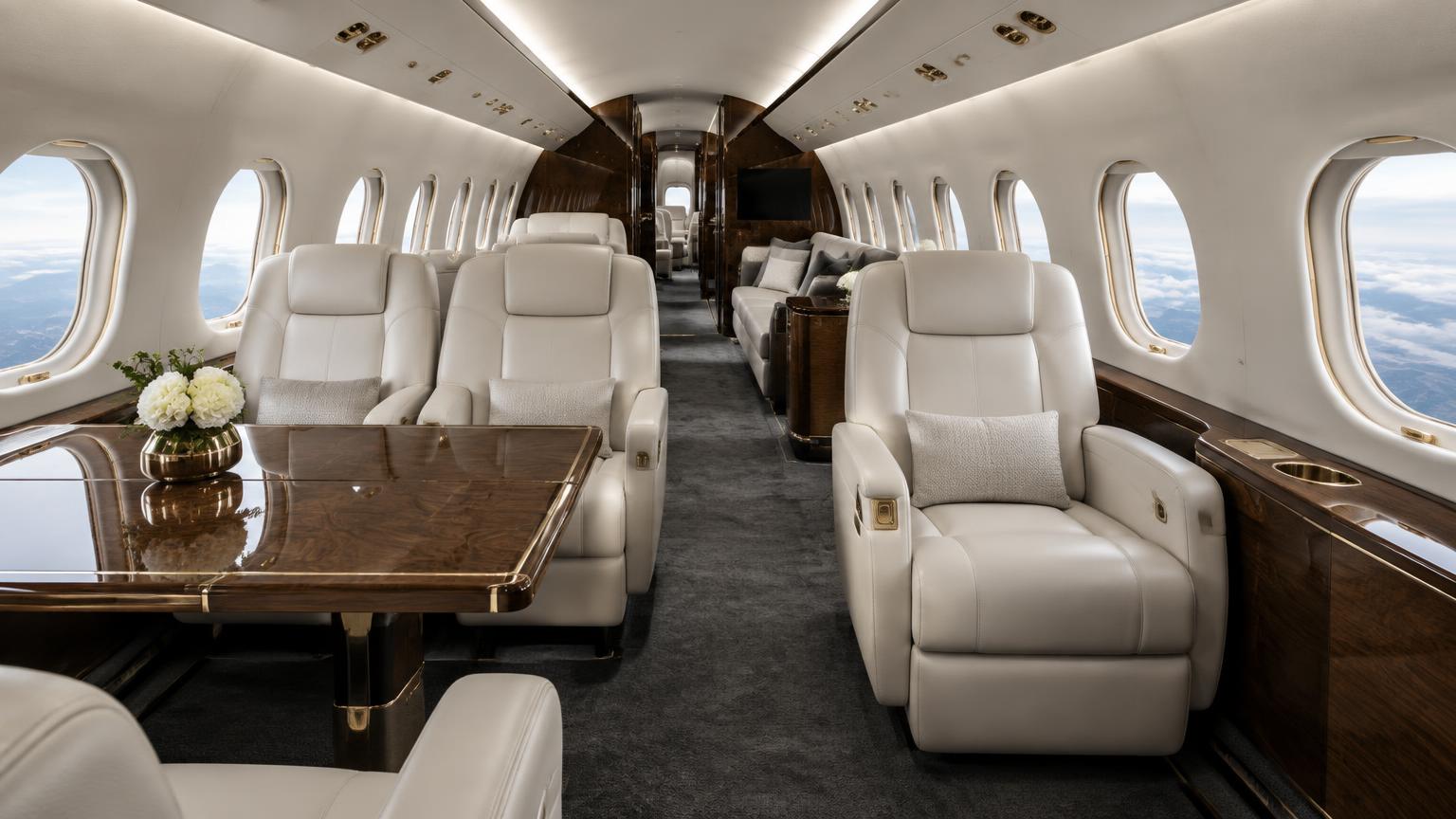
The illustrations are generated aviation imagery, not evidence of a specific aircraft or operator.
For a live itinerary, see the charter advisory guide or start a private enquiry.