Cards softened in Q3 — still well above 2019
Private Jet Card Comparisons tracks published North American jet card rates across more than eighty providers. Overall rates ended Q3 2026 at $10,958 per hour, down 3.1% quarter on quarter and 2.7% year on year — the lowest level since Q4 2023, yet still 23.7% above pre-COVID Q4 2019.
Category averages at the end of Q3 2026 were: turboprops $5,022; very light jets $7,341; light $8,333; midsize $9,607; super-midsize $12,485; large cabin $14,791; ultra long haul $19,433. Those hourly figures include base rate, fuel surcharges and 7.5% US Federal Excise Tax on the programmes in the database. They are useful benchmarks. They are not European charter quotes, and they are not a live all-in invoice for your next trip.
One further detail matters for short sectors: while headline rates fell, average daily minimums rose 2.2% in the quarter, to 95.0 minutes. Peak days remained about 45 — nearly double the 22.8 days of Q4 2019. Softening rates and tighter short-flight economics can coexist.
What a card buys — and what on-demand buys
A jet card typically prepays hours (or a monetary balance) at a published rate for a defined cabin class, with rules on call-out time, peak days, daily minimums, interchange and cancellation. Guaranteed availability, where offered, is the commercial point: you trade capital commitment and programme rules for a clearer hourly price and a clearer booking path.
On-demand charter is mission-priced. You buy a specific itinerary from a specific operator: the aircraft must reach you, fly your sectors, and then go wherever the next commitment requires. The quote reflects positioning, airport fees, crew duty, peak demand and substitution rights as much as the airborne hour. I set that out in more detail in all-in price versus hourly rate and charter pricing factors.
Neither product is “the market rate.” A card hourly figure is a programme rate. A charter quote is a journey price. Comparing them as if they were the same unit is how clients talk themselves into the wrong product.
Europe changes the arithmetic
Most published jet card indexes — including the Private Jet Card Comparisons series above — are North American. Europe’s operator landscape is more fragmented. Avi-Go’s 2025 annual report recorded that NetJets Europe held 12.99% of European operator departures (65,146 flights). Leadership without dominance is the point: many mid-sized and smaller operators still do most of the work.
Empty flying also weighs more heavily here. Avi-Go research puts European business jets empty on about 40% of sectors, versus about 30% in North America. That empty-sector share is why empty-leg economics and repositioning matter so much to European charter quotes: the aircraft’s location often moves the invoice more than the cabin class label.
For European all-in charter context, the Jet Supply European Private Jet Charter Price Index for Q3 2026 — compiled from brokerage quoting data on 66 priced aircraft — puts light jets at €4,700–€7,500 per block hour (mid-band €6,100) and ultra-long-range at €14,300–€22,500. Those are indicative all-in European bands, not card rates, and a live quote still moves with date, availability and positioning.
Empty-leg listings are a separate, opportunistic layer. In Limitless Sky’s June 2026 working sample we scanned 2,728 listings and retained 300 active legs; only 41% published a price, and the EUR-priced average across 23 legs was €23,976. That is a sample, not an industry index — useful as colour on opacity, not as a market mid-point. See Limitless Sky empty legs.
When I favour a card
I lean toward a card when the flying pattern is stable enough to justify prepaid hours. A card is a utilisation product. If your year looks like a schedule, prepaid hours can reduce decision friction. If your year looks like a series of exceptions, the prepaid commitment often becomes the expensive part.
- Predictable annual hours in a recurring cabin class, so the prepaid balance is likely to be used rather than stranded.
- Mostly North American or programme-covered geography, where published rates and guaranteed availability map to how you actually fly.
- Tolerance for programme rules: peak blackouts, call-out times, daily minimums, interchange categories and cancellation windows.
- A preference for one relationship and one rate card over shopping each mission.
When I favour on-demand charter
I favour on-demand — arranged through a broker who sources across operators — when the mission set is uneven. In a fragmented European market, the broker’s job is precisely to turn that variability into a short, explained shortlist — operator named, aircraft identified, inclusions clear — rather than forcing every trip into one prepaid silhouette. Charter enquiries I take are fulfilled through Limitless Sky; the comparison work comes first.
- Europe-heavy or multi-region travel, where North American card indexes do not describe the quote you will actually receive.
- Variable cabin needs: light jet for short European hops one week, super-midsize for a long sector the next.
- Specific airports, runway or baggage constraints that a generic interchange class will not guarantee.
- Peak flexibility: the ability to change dates, accept a nearby airport, or wait for an aircraft already in position.
- A wish to keep capital uncommitted until a trip is real.
How I compare them apples-to-apples
A useful comparison sheet looks less like “card hourly versus charter hourly” and more like a same-mission audit. Ownership sits outside this note, but the same mission logic applies — see charter versus owning. The product that wins is the one whose constraints match your year, not the one with the prettier headline rate.
- Same mission: same airports, dates, passengers, baggage and cabin needs — priced as a card debit (hours × rate, plus fees, peak and minimums) and as an all-in charter quote.
- Include what the hourly number hides: daily minimums, peak surcharges, ferry/positioning on charter, taxes, handling, overnight crew, interchange downgrades.
- Check geography: if the card rate is North American and the flying is European, you are not comparing like with like.
- Stress the exceptions: peak weeks, short-notice changes, and one-way European sectors where empty-sector rates are high.
- Ask what is guaranteed: availability, aircraft category, substitution rights, and what happens if the programme or the operator cannot perform.
My view, briefly
Softening North American jet card rates in Q3 2026 are real, and welcome for clients who fit those programmes. They do not make a card the default for European itineraries, nor do they make on-demand charter a bargain by slogan. I still start with the travel pattern: hours, geography, cabin consistency and tolerance for rules. Then I price the same missions both ways. The answer is usually obvious once the comparison is honest.
Frequently asked questions
Are jet card rates falling in 2026? — In North America, yes at the headline level. Private Jet Card Comparisons put overall published rates at $10,958 per hour at the end of Q3 2026, down 3.1% QoQ and 2.7% YoY, though still 23.7% above Q4 2019.
Is a jet card cheaper than charter? — Not automatically. A card hourly rate is a programme price; a charter quote is a journey price that includes positioning and trip-specific costs. Compare the same itinerary both ways, with fees and minimums included.
Do jet card indexes apply to Europe? — The Private Jet Card Comparisons figures cited here are North American. European charter pricing is more itinerary-driven, with a fragmented operator base and a higher empty-sector share.
When does on-demand charter make more sense? — When missions vary by cabin class, airports or region — especially Europe-heavy travel — or when you want to keep capital free and shop each trip on its facts.
What should I ask before buying a card? — Guaranteed availability terms, peak-day rules, daily minimums, interchange, geographic coverage, cancellation, and what happens to unused hours.
Planning a specific journey? Live charter enquiries are handled by Limitless Sky, where the operator, aircraft and terms for your itinerary can be discussed.
Sources & editorial notes
Written by Dr. Christoph Lymbersky as an authored perspective drawing on the public sources below. Sources reviewed 12 October 2026. General editorial guidance, not an individual operating, legal, tax or investment recommendation. Scenarios are labelled illustrative and do not describe real clients. No market-wide prices, statistics or guaranteed aircraft performance are asserted.
- Private Jet Card Comparisons — Q3 2026 jet card prices ↗
Industry tracking of jet card pricing in Q3 2026.
- Avi-Go — 2025 Annual Business Aviation Report (RD200) ↗
Flight-tracking research on business jet departures, countries, airports and aircraft in 2025.
- Avi-Go — Research & Consulting ↗
Avi-Go periodic market research, including January–August 2025 and 2026 monthly European data.
- Jet Supply — European Private Jet Charter Price Index Q3 2026 ↗
Brokerage all-in European block-hour bands from quoting data on 66 priced aircraft; indicative from-prices, not a live quote.
- Limitless Sky — Empty Legs ↗
Limitless Sky empty-leg working sample data.
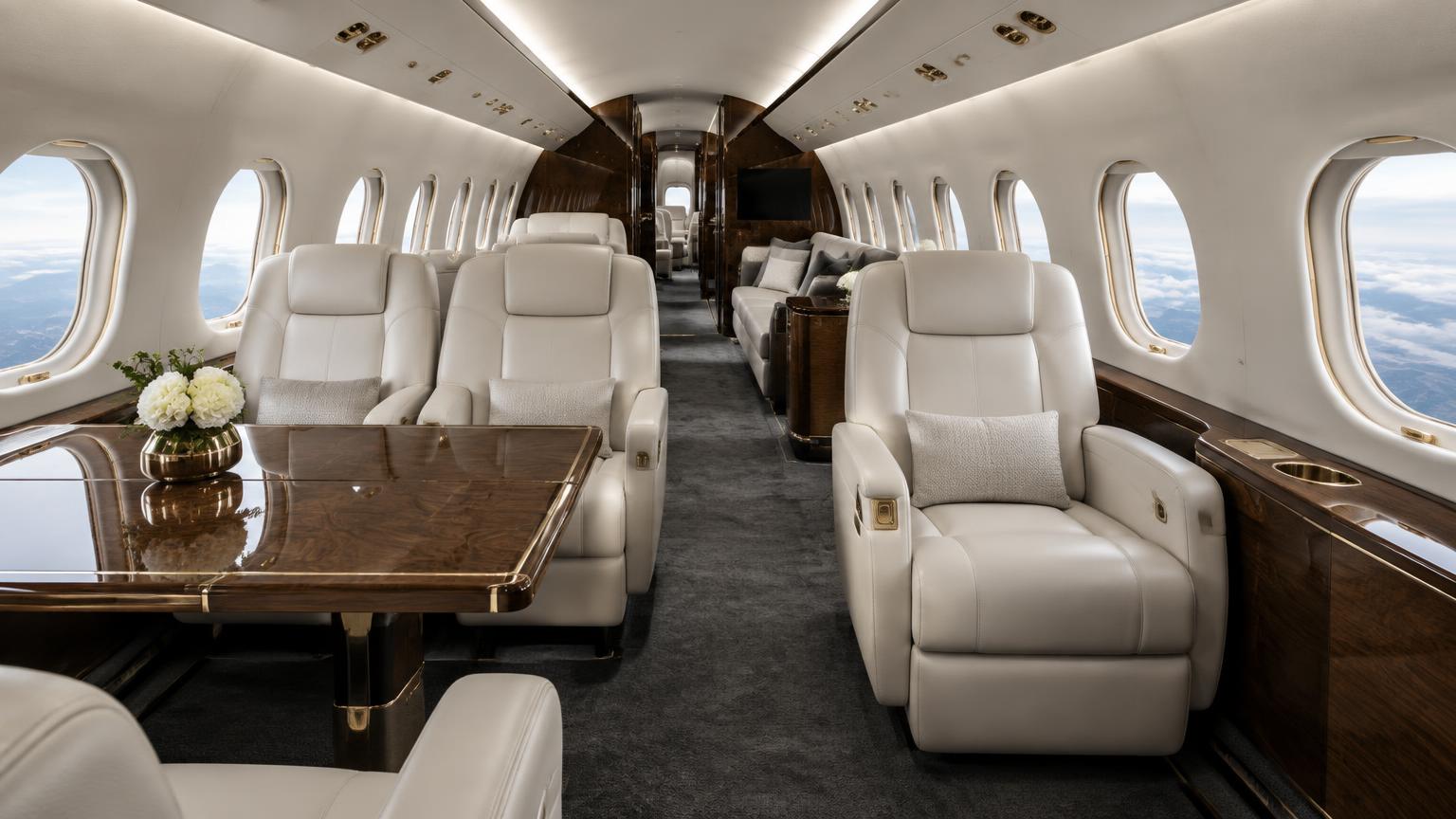
The illustrations are generated aviation imagery, not evidence of a specific aircraft or operator.
For a live itinerary, see the charter advisory guide or start a private enquiry.