Why a private jet changes the answer
On scheduled flights the limits are tight. Lufthansa, for example, takes small dogs and cats in the cabin only if the animal and its soft carrier together weigh no more than 8 kg, in a carrier of up to 55 × 40 × 23 cm stowed under the seat in front. Anything larger travels in the hold.
Great Britain is stricter still. GOV.UK states that pets have to travel as cargo on a plane unless you’re flying on a chartered private plane or travelling with a guide or assistance dog. In its response to a petition that closed in May 2026, the government explained that most pets are required to travel to GB by air as ‘manifest cargo’, so they can be taken straight to a pet checking facility, and that the only animals allowed in the cabin of a commercial aircraft into GB are recognised assistance dogs.
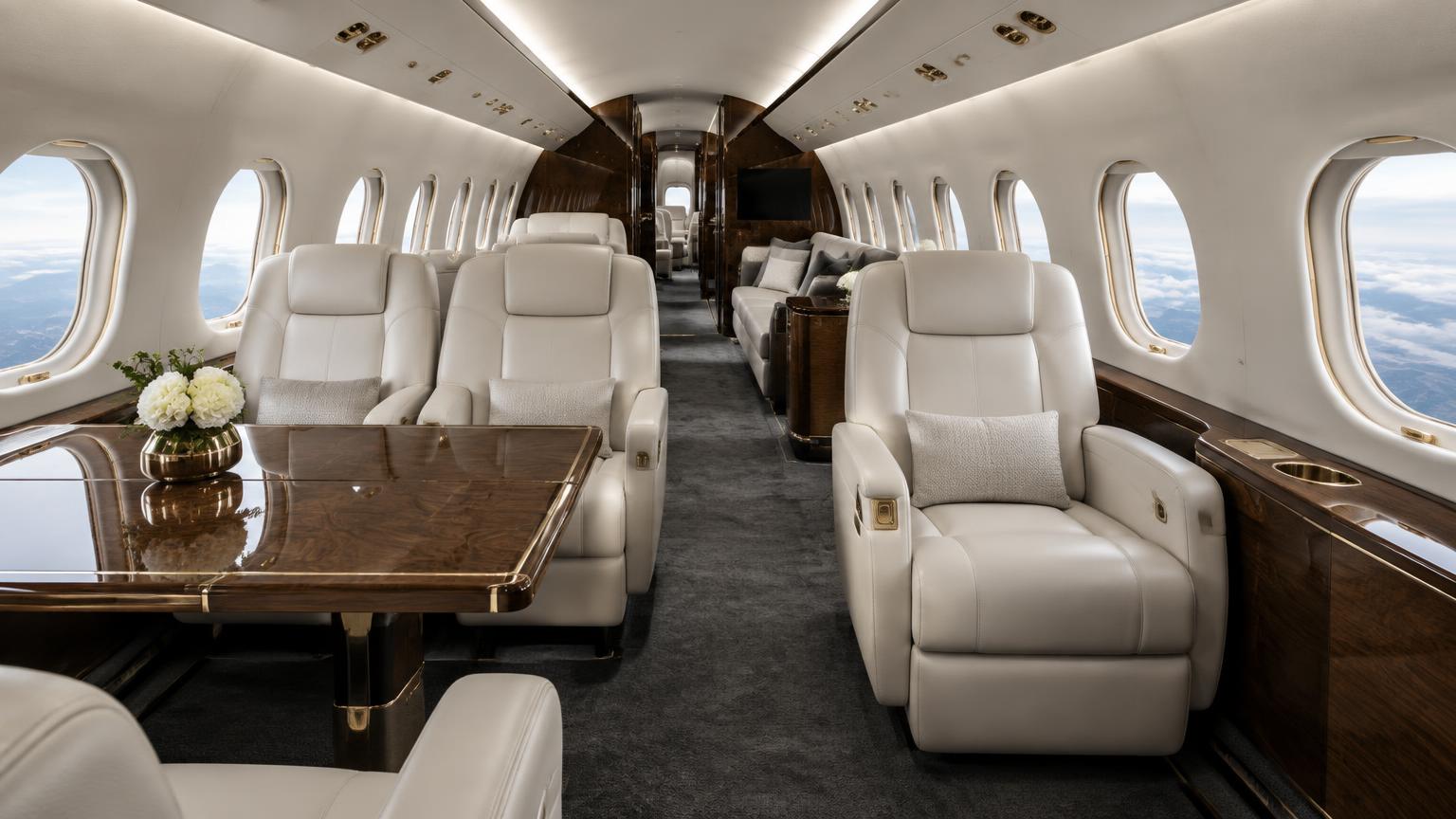
That is the practical case for charter. A Labrador flying from Nice to London on a scheduled service goes in the hold as cargo; on an approved charter flight it can travel in the cabin with its family. Whether the aircraft has the floor space for a large dog is a separate question, and one I come back to below.
The paperwork does not change with the aircraft
A private jet changes where the animal sits, not what it needs. Within the EU, the European Commission’s rules for dogs, cats and ferrets are the starting point. The Your Europe summary sets out the essentials:
- Microchip first: the pet must be microchipped before its rabies vaccination, or the vaccination does not count.
- Rabies vaccination: the first vaccination can be given from 12 weeks of age, and you must then wait at least 21 days before travelling. A booster given after the previous one has expired restarts the clock.
- Documents: an EU pet passport between EU countries, issued only to owners resident in the EU; arriving from outside the EU, an EU animal health certificate issued by an official vet not more than 10 days before arrival.
- Tapeworm: dogs travelling to Finland, Ireland, Malta, Norway or Northern Ireland need treatment between 24 and 120 hours before travel.
- Numbers: up to five pets travel under these non-commercial rules. Beyond that, the exceptions are narrow (competitions, shows and sporting events, for animals over six months).
Reading the EU rules as a traveller
Two details catch people out. The first is residency: since 1 January 2021, EU pet passports issued to owners resident in Great Britain are no longer valid for travel from Great Britain into the EU. A British family flying to the Côte d’Azur therefore needs an animal health certificate, issued within the 10-day window. That is a vet’s appointment to book around the flight, not the other way round.
The second is the point of entry. Arriving from outside the EU, the Commission says you can in principle only enter the EU with your pet through a designated travellers’ point of entry, where the documents and the animal are checked. If the checks fail, the animal may be sent back, quarantined or, where neither is possible, euthanised. On a private flight the choice of arrival airport is yours, so it is worth confirming that the one you choose is a designated point for pets. Young animals are another trap: Germany, France, Spain, Italy and several others do not admit young pets that are unvaccinated or not yet fully immune.
Flying into Great Britain: the operator must be approved
For a private flight into Great Britain, the aircraft operator matters as much as the animal. GOV.UK’s checklist starts with an approved route, unless you are flying from Ireland or within the UK. Carriers can only be approved for listed airports, several of which, including Biggin Hill, Farnborough, London Oxford and London Stansted, are for charter airlines only. Each carrier must also agree a required method of operation with APHA for every airport it uses.
APHA publishes the approved list and updates it often; the version I checked was updated on 23 October 2026. By my count, its charter table names 571 operators, of which 413 are approved for Biggin Hill and 372 for Farnborough. That sounds generous, but approval is per operator and per airport. An aircraft that is perfect for the trip may belong to an operator that is not on the list for your airport, and then the dog cannot come on that flight.
At the airport, the pet arrival is its own process. Biggin Hill’s SkyPets service requires the operator to hold prior Defra approval and needs all pet paperwork at least 24 hours before arrival. Farnborough runs its own Pet Travel Scheme service. Dogs also need tapeworm treatment no less than 24 hours and no more than 5 days before arrival, and a pet that does not meet the rules can be quarantined for up to four months at the owner’s expense. For how the London airports compare on other counts, see my guide to London’s private jet airports.
Germany: the breed question
Germany adds a rule that has nothing to do with rabies. Under the HundVerbrEinfG, Pit Bull Terriers, American Staffordshire Terriers, Staffordshire Bull Terriers, Bull Terriers and their crosses may not be brought into the country, and breeds that a federal state presumes dangerous may not be brought into that state. Bringing in a banned dog is a criminal offence, with up to two years’ imprisonment or a fine.
There are exceptions. A dog accompanying someone who does not live in Germany may visit for no longer than four weeks, dogs lawfully kept in Germany may return home, and assistance, guide and rescue dogs are exempt. German customs expects original documents, with certified German translations where they are in another language. For a private flight into Munich, Hamburg or Sylt with one of these breeds, I would want the papers settled before I confirm the aircraft. Germany’s wider market is covered in my note on German private aviation.
What I check before quoting a flight with a pet
Charter enquiries I take are fulfilled through Limitless Sky. When an animal is on the passenger list, these are the questions I settle before I put a quote in front of a client:
- Does the operator accept pets, how many, and does it want proof of fitness to fly? GOV.UK tells travellers to check whether the company will accept your pet, and how many.
- For Great Britain: is this operator on APHA’s list for this arrival airport, and has the airport’s pet team received the paperwork in time?
- For the EU from outside: is the arrival airport a designated travellers’ point of entry, and is the animal health certificate dated within 10 days of arrival?
- Do the tapeworm and vaccination windows still work if the flight slips by a day? A tight schedule can turn a valid document into an invalid one.
- Does the cabin suit the animal? A large dog takes floor space, and on a light jet that space is limited. I discuss cabin and baggage trade-offs in luggage, cabin and runway performance.
- Are cleaning or handling charges included? Ask before you book, so that the all-in price really is all-in.
My view, briefly
Flying privately with a pet is one of the clearest cases where charter solves a real problem rather than adding luxury. The aircraft is the easy part. Most of the work is in the dates: the vaccination, the tapeworm window, the 10-day certificate, the 24-hour notice at the airport. Most of the risk sits with the operator and the arrival airport. If those are checked before the aircraft is chosen, not after, the dog simply comes along. If they are not, the family discovers the rules at the border, which is the worst place to learn them. A broker who asks the right questions early is worth most on exactly these trips.
Frequently asked questions
Can my dog sit with me on a private jet? — Usually yes, if the operator accepts pets. Into Great Britain, GOV.UK says pets travel as cargo unless you are on a chartered private plane or with an assistance dog, and the charter operator must be approved by APHA for your arrival airport.
Which UK airports accept pets on private jets? — APHA approves operators airport by airport. Biggin Hill, Farnborough, London Oxford and London Stansted are among the airports listed for charter airlines only; in the list updated on 23 October 2026, 413 charter operators were approved for Biggin Hill and 372 for Farnborough.
What documents does my pet need to fly privately within the EU? — A microchip, a valid rabies vaccination (at least 21 days after the first one) and an EU pet passport for EU residents. Arriving from outside the EU, an EU animal health certificate issued not more than 10 days before arrival. Dogs flying to Finland, Ireland, Malta, Norway or Northern Ireland also need tapeworm treatment 24 to 120 hours beforehand.
Can I fly into Germany with a Staffordshire Bull Terrier? — Generally not: Germany bans bringing in Pit Bull Terriers, American Staffordshire Terriers, Staffordshire Bull Terriers, Bull Terriers and their crosses. Visitors not resident in Germany may bring such a dog for up to four weeks with the right documents, and assistance dogs are exempt.
Planning a specific journey? Live charter enquiries are handled by Limitless Sky, where the operator, aircraft and terms for your itinerary can be discussed.
Sources & editorial notes
Written by Dr. Christoph Lymbersky as an authored perspective drawing on the public sources below. Sources reviewed 29 October 2026. General editorial guidance, not an individual operating, legal, tax or investment recommendation. Scenarios are labelled illustrative and do not describe real clients. No market-wide prices, statistics or guaranteed aircraft performance are asserted.
- GOV.UK — Bringing your pet dog, cat or ferret to Great Britain: travel routes for pets ↗
Pets have to travel as cargo on a plane unless flying on a chartered private plane or travelling with a guide or assistance dog; approved routes apply except from Ireland; check the travel company’s own rules on how many pets it will accept.
- GOV.UK — Bringing your pet dog, cat or ferret to Great Britain: what you need to do ↗
Approved route, microchip, rabies vaccination at least 21 full days before travel, travel document, tapeworm treatment for dogs 24 hours to 5 days before arrival, declaration; quarantine of up to 4 months if the rules are not followed.
- APHA / Defra — Pet travel: airlines and airports you can use (updated 23 October 2026) ↗
List of commercial and charter airlines approved to bring pets into named Great Britain airports. The Jet Broker’s count of the charter table on 29 October 2026: 571 charter operators, 413 approved for Biggin Hill and 372 for Farnborough. The list changes often.
- GOV.UK — Air carriers: transport pets and assistance dogs ↗
Carriers can only be approved to bring pets into listed Great Britain airports, several of them for charter airlines only (including Biggin Hill, Farnborough, London Oxford and London Stansted), and must agree a required method of operation (RMOP) with APHA for each airport.
- UK Parliament Petitions — Government response: Allow small pets to travel in the cabin on flights entering the UK (closed 13 May 2026) ↗
Government response: most pets must travel to Great Britain by air as manifest cargo so they can be taken to the pet checking facility; the only animals authorised in the cabin of a commercial aircraft into GB are recognised assistance dogs.
- European Commission, Your Europe — Travelling with pets and other animals in the EU ↗
Microchip before rabies vaccination; first vaccination from 12 weeks, then at least 21 days before travel; EU pet passport for EU residents; EU animal health certificate issued not more than 10 days before arrival from a non-EU country; tapeworm treatment 24–120 hours before entering Finland, Ireland, Malta, Norway or Northern Ireland; up to five pets; designated travellers’ points of entry for arrivals from outside the EU.
- London Biggin Hill Airport — SkyPets ↗
The aircraft operator must have prior Defra approval to use the SkyPets service; the airport must be informed and have received all pet paperwork at least 24 hours before a pet arrival.
- Farnborough Airport — For passengers and pets ↗
Airport-run Pet Travel Scheme (PETS) service for pets arriving and departing through Farnborough.
- Lufthansa — Animals as additional carry-on baggage ↗
Small dogs and cats up to 8 kg including a soft carrier of no more than 55 × 40 × 23 cm, stowed under the seat in front; minimum age 15 weeks for carriage from, to or via Germany.
- Zoll (German Customs) — Gefährliche Hunde ↗
Pit Bull Terriers, American Staffordshire Terriers, Staffordshire Bull Terriers, Bull Terriers and their crosses may not be brought into Germany; exceptions include visitors staying no longer than four weeks and assistance dogs, with original documents and certified German translations.
- Gesetz zur Beschränkung des Verbringens oder der Einfuhr gefährlicher Hunde in das Inland (HundVerbrEinfG) ↗
§ 2: import and movement ban on the four listed breeds and their crosses, plus breeds presumed dangerous under the law of the federal state where the dog will be kept; § 5: up to two years’ imprisonment or a fine.
- Hundeverbringungs- und -einfuhrverordnung (HundVerbrEinfVO), § 2 Ausnahmen ↗
Exceptions: service, guide, assistance and rescue dogs; dogs returning to a place in Germany where they may lawfully be kept; dogs accompanying a person not resident in Germany for a stay of no more than four weeks.
The illustrations are generated aviation imagery, not evidence of a specific aircraft or operator.
For a live itinerary, see the charter advisory guide or start a private enquiry.