What the range really means
Bombardier’s fact sheet gives the Global 6000 a theoretical range of 6,000 nautical miles at Mach 0.85, with eight passengers, four crew, ISA conditions and NBAA IFR reserves. Duncan Aviation’s May 2026 model summary, which uses Conklin & de Decker and Vref figures, is more conservative once every seat is filled: 5,890 nm seats-full, and 6,080 nm on a ferry flight with no passengers. Typical cruise is 488 knots in Duncan’s figures, 487 knots (Mach 0.85) in the fact sheet; high-speed cruise is Mach 0.88, or 504 knots.
The gap between the brochure and the seats-full number is modest, but it is the seats-full figure I use when a cabin is full. Payload with full tanks is 2,470 lb in Duncan’s summary. Manufacturers’ range figures also assume still air and a stated reserve policy; the operator’s flight plan for your load, the winds and the alternate is what matters. I set this out more fully in my note on realistic range and reserve margins.
By my calculation, using great-circle distances, the following city pairs sit comfortably inside the 5,890 nm seats-full figure: Frankfurt to Teterboro, about 3,343 nm; Paris Le Bourget to Teterboro, about 3,150 nm; Farnborough to Dubai, about 2,978 nm; and Miami to Farnborough, about 3,829 nm. Los Angeles to Farnborough is about 4,729 nm, still inside on paper, but I ask the operator for a fuel plan at the actual passenger load before I promise a non-stop flight, especially westbound in winter. Frankfurt to Singapore is about 5,550 nm, only some 340 nm inside the seats-full figure, so I do not treat that as a reliable non-stop without the plan for the day.
The published take-off distance at maximum take-off weight, sea level and ISA, is 6,476 ft, or 1,974 m; landing distance at maximum landing weight is 2,670 ft, or 814 m. Maximum take-off weight is 99,500 lb. Those runway figures, not the range line, are what I check first at shorter European fields.
The cabin you actually sit in
The fact sheet gives a cabin 43 ft 3 in long, from the cockpit divider to the most aft cabin, excluding the baggage compartment, 7 ft 11 in wide at the centreline and 6 ft 2 in high. Standard configuration is 12 passengers; flexible layouts go higher. Duncan lists typical seating for 13. Baggage volume in the manufacturer’s materials is 195 cubic feet, accessible in flight.
That is a genuine ultra-long-range cabin: enough length for three living areas, and enough height and width that eight or ten people can work or rest without living on top of one another. For four passengers on a two-hour European sector it is more cabin than the trip requires; I come back to that below. For a night crossing of the Atlantic, or a family moving with real luggage, the volume is the point.
I always ask for the actual seating plan, the year of the interior, and what connectivity is installed. On a type with more than a decade in service, two aircraft with the same model name can feel a generation apart in the cabin.
What it costs to charter, and to run
Jet Supply’s Q4 2026 European index, revised on 1 November, puts ultra-long-range jets, a class in which it lists the Global 7500, the Gulfstream G650 and the Falcon 8X, at €9,900 to €17,000 per hour in the air, twelve to fourteen seats. Crew and fuel are included; positioning, airport and handling fees and taxes are not. On the transatlantic route the same index gives an ultra-long-range flight from Miami to London 7 hours 35 minutes, from €75,100 flight only and €107,000 to €151,000 all-in, one way. How an hourly rate turns into a trip price is in my note on all-in prices and hourly rates.
Behind the charter rate, Duncan estimates the Global 6000’s variable cost at $8,372 per hour, at a fuel price of $5.69 per gallon and excluding major inspections, with an average fuel burn of 494 gallons per hour. That is the cost of operating the aircraft once it is in the air, not the charter price you are quoted.
On the used market, Duncan’s May 2026 Vref marketing values for the Global 6000 run from $19.531 million to $62.300 million. The spread is largely year of build, hours and condition. A 2012 aircraft and a late example are not interchangeable, and I never treat the model name as a price. I look at the tail number, the maintenance status and the interior date, as I do in my note on used private jet prices.
How much the type actually flies
This is not a rare aeroplane. Avi-Go’s 2025 annual report ranked the Global 6000 second among ultra-long-range jets, with 49,395 departures and a 13.14% share of ultra-long-range flying. In June 2026 it was Bombardier’s third most flown type in Europe, with 1,623 flights, 21.66% of the manufacturer’s European mix, and second in the rest of the world, with 941 flights, 26.38% of the brand. GAMA’s 2025 shipment report recorded 86 deliveries across the Global family (5500, 6000, 6500, 7500 and 8000 combined). I cannot separate the 6000 from that family total, and I do not try to; what the utilisation figures show is that the type is still doing a great deal of the world’s long-range work.
The longer current flagship is discussed in my note on the Global 7500. When the mission does not need ultra-long range, a large-cabin jet such as the Challenger 650 is often the more honest quote.
Where I use it, and where I do not
I use the Global 6000 for eight to twelve passengers on long sectors: New York or Miami to London, Frankfurt or Paris; Europe to the Gulf; and trips that need a cabin in which people can sleep. I do not use it for four passengers on a two-hour European hop, where a super-midsize or heavy jet does the same job for less, or for the very longest city pairs, such as Frankfurt to Singapore, without a fuel plan that supports a non-stop flight.
The Global 6000 is a proven intercontinental cabin with a deep charter fleet. It should be quoted for that, not because the name is familiar.
Questions I am asked
Can a Global 6000 fly non-stop from Frankfurt to New York? — Yes. By my calculation, Frankfurt to Teterboro is about 3,343 nm, well inside its 5,890 nm seats-full range, subject to the operator’s fuel plan on the day.
Can it fly Miami to London non-stop? — Yes. Miami to Farnborough is about 3,829 nm by my calculation, inside the seats-full figure. Jet Supply’s Q4 2026 index gives that sector 7 hours 35 minutes in the ultra-long-range class.
What does it cost to charter in Europe? — In Jet Supply’s Q4 2026 index, ultra-long-range jets run €9,900 to €17,000 per hour in the air, crew and fuel included, before positioning, fees and taxes. Your quote depends on the specific aircraft, its position and the dates.
What is a used Global 6000 worth? — Duncan’s May 2026 Vref marketing values run from $19.531 million to $62.300 million, depending on year, hours and condition. The tail number matters more than the model name.
How is the Global 6000 different from the Global 7500? — The 7500 is the longer-range, later flagship, with a larger cabin. The 6000 is the type I am offered more often on charter, because so many are in service. For missions near the edge of range, I compare specific aircraft, not brochures.
Planning a specific journey? Live charter enquiries are handled by Limitless Sky, where the operator, aircraft and terms for your itinerary can be discussed.
Sources & editorial notes
Written by Dr. Christoph Lymbersky as an authored perspective drawing on the public sources below. Sources reviewed 22 November 2026.
General guidance, not individual legal, tax or investment advice. Figures come from the sources below unless marked as my own calculation. Client examples are anonymized.
- Bombardier — Global 6000 fact sheet (hosted copy) ↗
Branded businessaircraft.bombardier.com. Theoretical range 6,000 nm at Mach 0.85, NBAA IFR reserves, ISA, 8 passengers and 4 crew; typical cruise Mach 0.85 / 487 KTAS; high-speed cruise Mach 0.88 / 504 KTAS; take-off 6,476 ft (1,974 m) at MTOW, sea level, ISA; landing 2,670 ft (814 m) at MLW; MTOW 99,500 lb; cabin 43 ft 3 in long, 7 ft 11 in wide (centreline), 6 ft 2 in high; standard configuration 12 passengers; engines Rolls-Royce BR710A2-20.
- Duncan Aviation — Business Jet Model/Market Summary ↗
Vref value ranges and variable cost per hour by model. Values are indicative, not appraisals.
- Jet Supply — European Private Jet Charter Price Index Q4 2026, revised 1 November 2026 ↗
Revised bands per hour in the air for the whole aircraft, crew and fuel included, positioning, airport and handling fees and taxes excluded: midsize jet (Learjet 60XR, Hawker 900XP) €5,300–€7,000; super midsize jet (Challenger 350, Praetor 600, G280) €6,000–€9,000, mid-band €7,500; super light jet €4,000–€6,000; London–Mykonos (3h 30m, super midsize) flight only from €21,000, typical all-in €37,000–€52,000 one way; not comparable with the Q3 2026 edition.
- Avi-Go — 2025 Annual Business Aviation Report (RD200) ↗
Flight-tracking research on business jet departures, countries, airports and aircraft in 2025.
- Avi-Go — Research & Consulting ↗
Avi-Go periodic market research, including January–August 2025 and 2026 monthly European data.
- GAMA — 2025 Year-End Aircraft Shipments and Billings Report ↗
General Aviation Manufacturers Association delivery data by manufacturer and model for 2025.
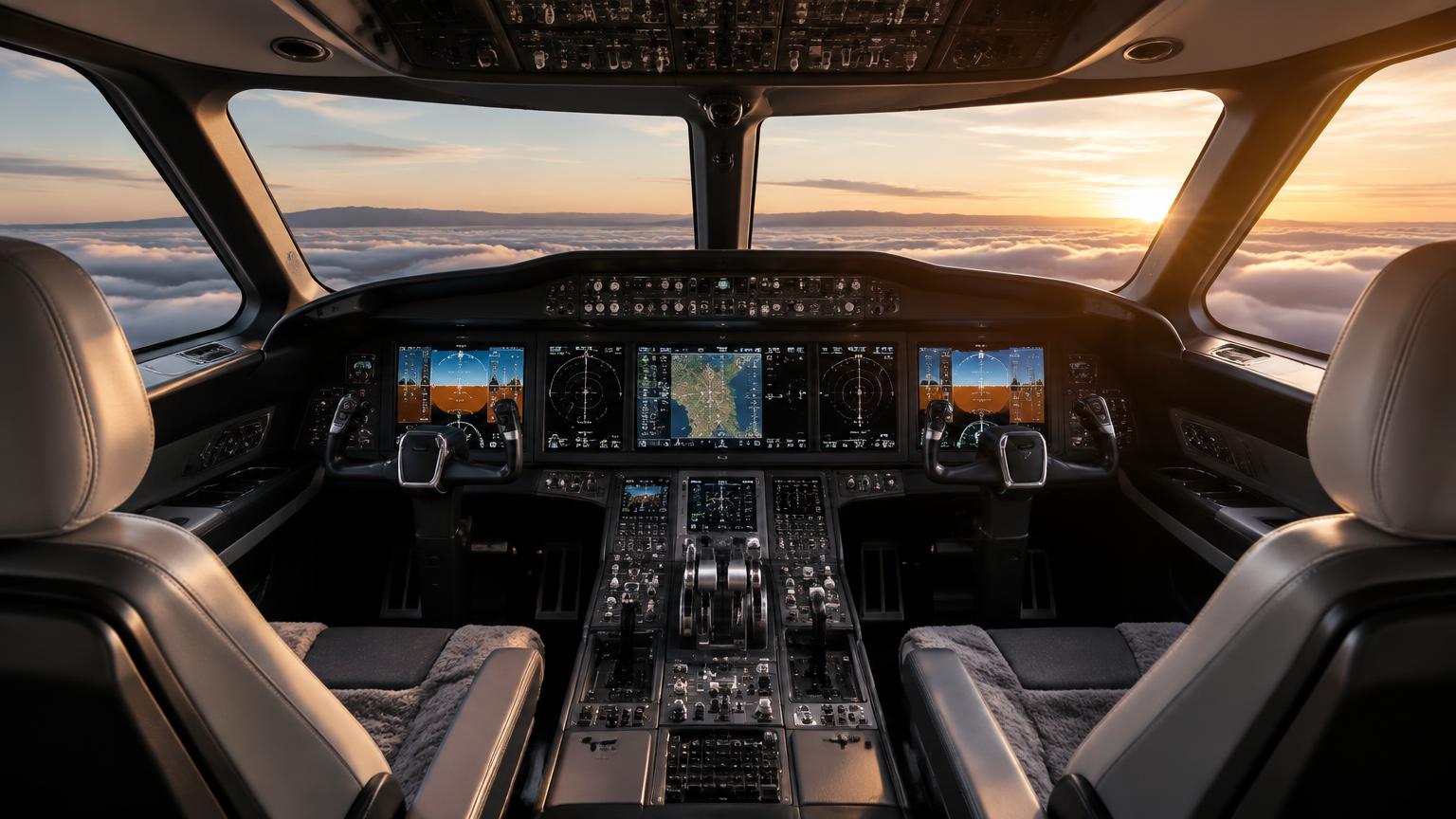
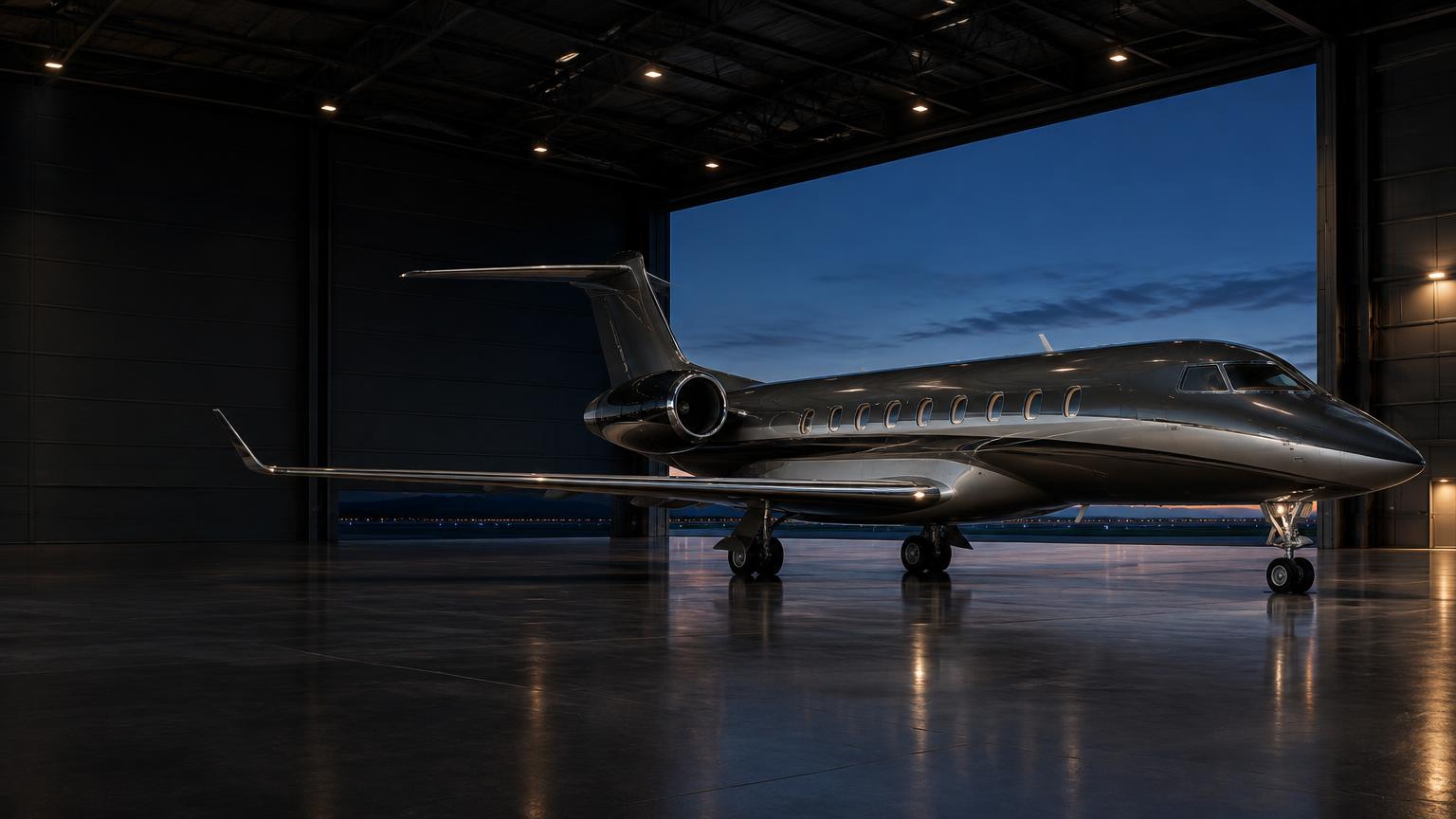
The illustrations are generated aviation imagery, not evidence of a specific aircraft or operator.
For a live itinerary, see the charter advisory guide or start a private enquiry.