Missions that justify it
Bombardier positions the Global 7500 for ultra-long-range flights and presents a multi-zone cabin. It is most compelling for long intercontinental sectors where nonstop travel and rest are priorities, for larger groups who need separate spaces, or where a fuel stop would create genuine cost or risk.
For these missions, the ability to fly nonstop in a cabin designed for rest can change the outcome of a trip.
Missions where it is excessive
On shorter or medium-range sectors, a smaller long-range or super-midsize aircraft may meet every requirement at materially lower cost. Large aircraft also carry higher repositioning costs if not already nearby.
The suitable aircraft is the smallest one that meets the mission with comfortable margins. See choosing aircraft categories.
Airport and runway considerations
Larger aircraft may have more demanding runway and airport requirements, depending on weight, temperature and elevation. At some smaller or high-altitude airports, the operator may need to limit payload or fuel. Confirm with the operator for the actual departure and arrival airports.
See runway performance.
Cabin zoning and long-range rest
On a very long sector, the ability to separate sleeping, working and dining spaces changes how passengers arrive. Bombardier presents the Global 7500 with multiple cabin zones. The practical question is how the specific aircraft is configured: how many passengers can sleep flat, whether a private suite exists and where the crew rest area is located.
Ask for the actual layout and berthing count rather than relying on a marketing illustration, which may show an optional configuration.
Comparing alternatives
The Global 7500 is often compared with other ultra-long-range aircraft such as Gulfstream’s large-cabin models. Comparisons are most useful when made between specific available aircraft for a specific route. See G650 vs G700 and Falcon 8X vs G650 for related decision frameworks.
For missions that do not require ultra-long range, a super-midsize or large-cabin aircraft with lower positioning and operating costs may meet the brief entirely.
Suitability checklist
Before requesting a Global 7500 specifically, check whether the mission needs what it offers.
- Is the sector long enough that nonstop capability changes the trip?
- Do several passengers need separate rest areas?
- Can the departure and arrival airports accommodate the aircraft at expected weights and temperatures?
- Is an aircraft available without long positioning?
- Would a smaller long-range aircraft meet the brief with comfortable margins?
- What are the cancellation and substitution terms if this specific aircraft becomes unavailable?
Substitution: define it before you need it
Because large ultra-long-range aircraft are fewer in number, a like-for-like substitute may be hard to find at short notice. Agree in the contract what counts as an acceptable substitute and what your options are if none is available. A vague promise of an “equivalent aircraft” is especially weak in this category. See disruption costs.
Cost logic for a large ultra-long-range aircraft
Large ultra-long-range aircraft are typically among the more expensive options to charter, for structural reasons: higher fuel burn, larger crews on long sectors, higher maintenance costs and fewer aircraft available, which often means longer positioning. None of these costs disappears simply because the mission is short.
The value case therefore rests on what the aircraft makes possible: a nonstop flight where a smaller aircraft would stop, a cabin where several passengers can genuinely rest, or a payload that a smaller aircraft could not carry over the distance. When the mission needs those things, the cost is buying a different journey. When it does not, the same money buys little that a smaller aircraft would not provide. No market figures are asserted here; ask for complete quotations for both the Global 7500 and a credible smaller alternative, and compare what each journey actually delivers.
Common misconceptions
The Global 7500 is an exceptional tool for the right job. Treating it as a default rather than a choice tends to add cost without improving the journey.
- “If I can afford the largest aircraft, it is the right one.” Suitability depends on mission, airports and positioning.
- “A Global 7500 can use any airport a smaller jet can.” Larger aircraft can face tighter runway and airport limits.
- “Ultra-long-range means no fuel stop on any route.” Winds, load, alternates and reserves still apply.
- “A substitute will be easy to find.” Like-for-like replacements are scarcer in this category.
Framing the request
Rather than asking for “a Global 7500,” describe the mission and invite the broker to justify the aircraft. For example: eight passengers, overnight intercontinental sector, four need flat beds, nonstop strongly preferred, departure from a specific airport in summer. A good broker will then confirm whether a Global 7500 is the best fit or whether another aircraft meets the brief with less positioning or cost.
If the Global 7500 is confirmed as the right choice, agree the substitution terms explicitly and ask the operator for a flight plan on your date. Those two steps protect the decision against the most common sources of disappointment: an unsuitable replacement aircraft and an unplanned fuel stop.
Questions to ask
Request the specific aircraft’s cabin layout, sleeping arrangements, connectivity and refurbishment date. Ask the operator to confirm nonstop feasibility for your route, date and load, including alternates.
Published range describes the type under defined conditions. This note deliberately avoids restating specification figures. Manufacturer data reflects stated assumptions; the operator’s flight planning for the actual aircraft, load, route and weather is authoritative.
- Is nonstop feasible for my route and load on my dates?
- Where is the aircraft based, and what repositioning is required?
- What is the cabin configuration and berthing capacity?
- Are there airport restrictions at either end?
Sources & editorial notes
Written by Dr. Christoph Lymbersky as an authored perspective drawing on the public sources below. Sources reviewed 9 October 2026. General editorial guidance, not an individual operating, legal, tax or investment recommendation. Scenarios are labelled illustrative and do not describe real clients. No market-wide prices, statistics or guaranteed aircraft performance are asserted.
- Bombardier — Global 7500 ↗
Manufacturer page. Published performance reflects stated assumptions and should be confirmed by the operator for the actual mission.
- eCFR — 14 CFR Part 135 Subpart I, Airplane Performance Operating Limitations ↗
US performance rules covering takeoff and landing limitations for commercial operations.
- eCFR — 14 CFR 135.223, IFR alternate airport requirements ↗
US on-demand operator requirements for fuel to an alternate airport and reserves under instrument flight rules.
- NBAA — Aircraft Charter Consumer Guide ↗
Consumer-oriented guidance on charter quotations, operators and contracts, written primarily from a US perspective.
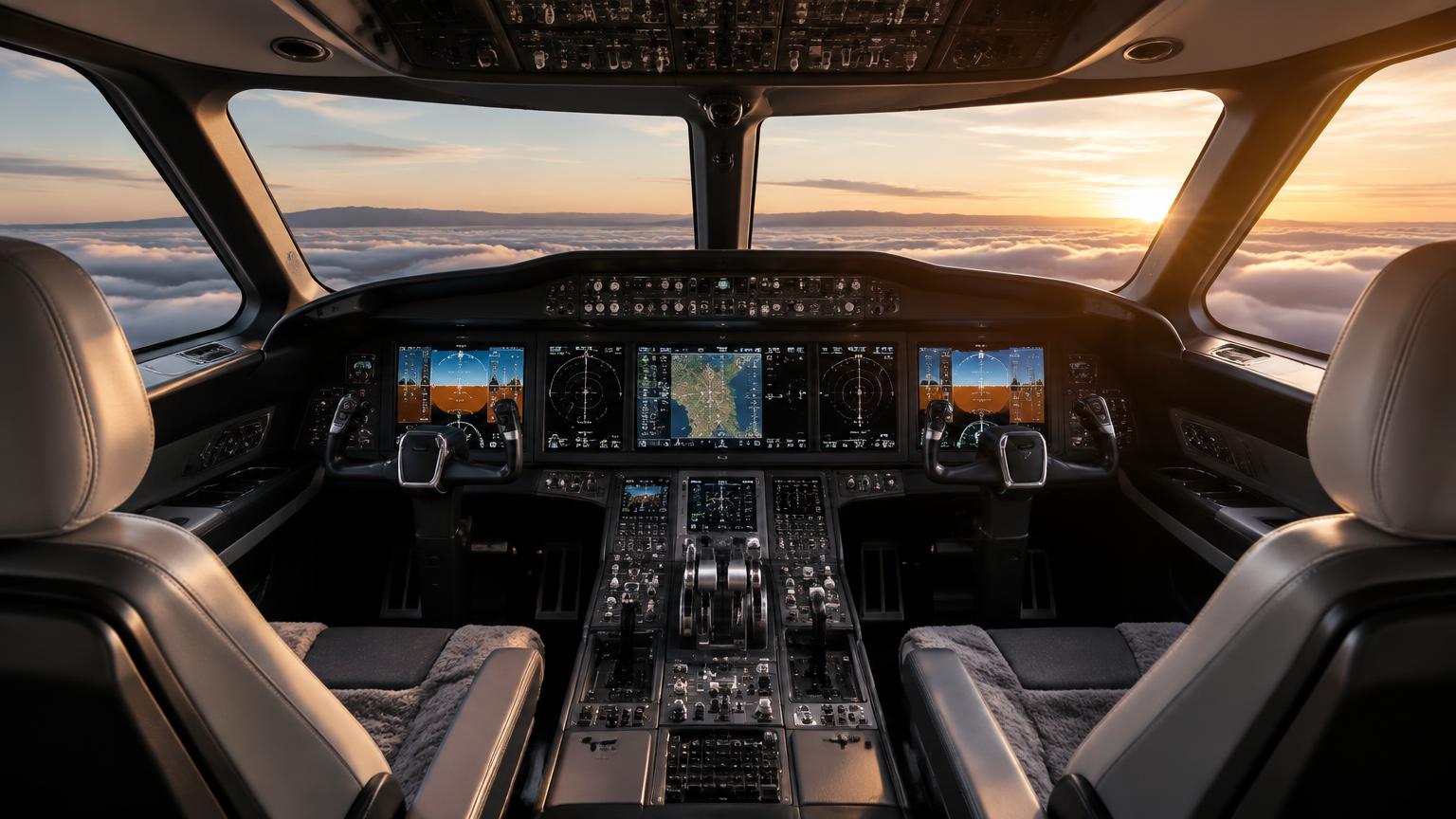
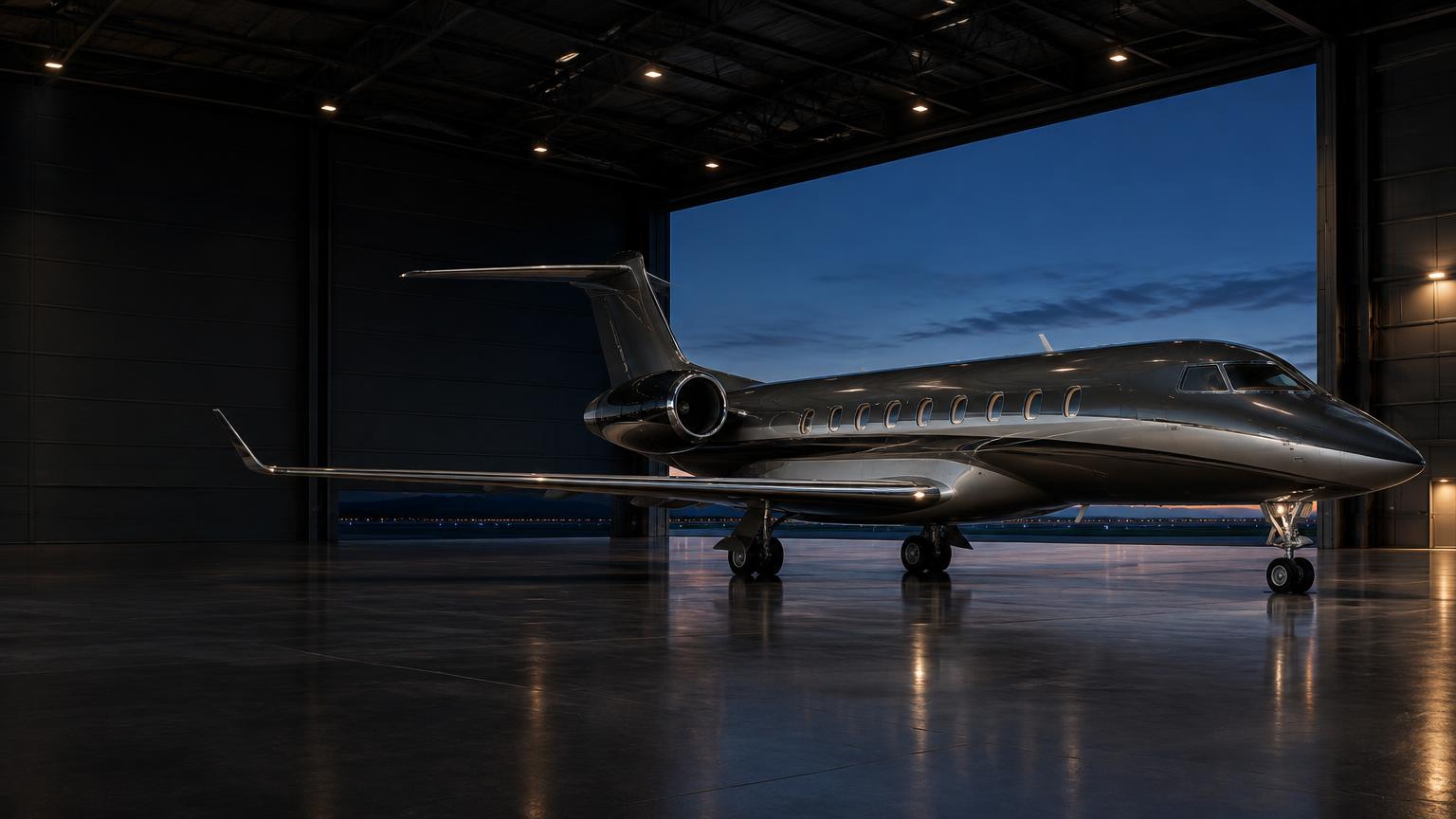
The illustrations are generated aviation imagery, not evidence of a specific aircraft or operator.
For a live itinerary, see the charter advisory guide or start a private enquiry.