What a published range assumes
Manufacturer range figures are typically stated with a defined number of passengers, crew, speed and reserves. Gulfstream, for example, footnotes its maximum range figures. These are valid comparisons between types; they are not promises for a particular flight.
Read the footnotes, then set them aside for planning.
What reduces practical range
More passengers and baggage increase weight. Headwinds, especially seasonal jet-stream winds on westbound routes, reduce ground distance covered. Routing restrictions add miles. Higher cruise speeds increase fuel burn. Departure airport performance limits may restrict takeoff weight.
- Passenger and baggage load
- Seasonal and daily winds
- Air-traffic routing and restricted airspace
- Selected cruise speed
- Departure runway, temperature and elevation
Reserves are not optional
Regulations require fuel to reach the destination, then an alternate where required, plus a reserve. In the United States, 14 CFR 91.167 sets a baseline for IFR flight and 14 CFR 135.223 addresses alternate requirements for on-demand operators. Other authorities apply their own rules, and many operators add company margins.
These reserves exist for the day the destination is closed or weather deteriorates. They are not a commercial variable—see negotiating without hidden risk.
Alternates: the airport you hope not to use
When weather at the destination is forecast to be marginal, regulations generally require the flight to carry fuel to an alternate airport as well. The choice of alternate affects fuel required: a nearby alternate costs less fuel than a distant one. At remote or weather-prone destinations, suitable alternates may be far away, reducing practical range noticeably.
14 CFR 135.223 sets out US on-demand alternate requirements; EASA-based rules apply in Europe; other authorities have their own. Operators often add company policies on top.
Winter, summer and the same route
The same city pair can be comfortably nonstop in one season and marginal in another. Prevailing winds shift with the seasons, and hot temperatures at departure can limit takeoff weight at some airports. This is why a nonstop that worked last summer may need a fuel stop in winter, or the reverse. Ask the operator to plan for your actual date rather than relying on a previous trip.
Planning checklist
Give the operator what it needs to plan accurately, and ask the questions that reveal margin.
- Exact passenger count and estimated baggage weight
- Departure and arrival airports, not just cities
- Date and preferred time of day
- Is nonstop essential, preferred or optional?
- What alternate is planned and how far is it?
- What happens if forecast winds worsen?
- If a fuel stop is needed, where, and how long?
Why a planned stop can be the better choice
A planned fuel stop is predictable: passengers know when and where it will happen, catering and handling are arranged, and fuel margins are generous. An optimistic nonstop that becomes an unplanned diversion is neither predictable nor comfortable. For some missions, a slightly smaller aircraft with a planned stop is a better outcome than a larger, more expensive aircraft flown at the edge of its capability—see choosing aircraft categories.
Range and the choice of aircraft category
Range questions often push clients towards larger aircraft than they need. A larger aircraft may fly a route nonstop with comfortable margin, but it also costs more, may require more positioning and may be restricted at smaller airports. For routes near the boundary between categories, it is worth asking for both options and comparing the complete journeys. A slightly longer trip with a planned stop on a well-suited midsize aircraft may serve the passengers better than an oversized aircraft chosen solely to avoid the stop.
Common misconceptions
Range misconceptions are the source of many disappointed expectations in private aviation. Correcting them early—before an aircraft is chosen—prevents most of the disappointment.
- “If it did the route last time, it will again.” Winds, temperature and load change with the date.
- “Reserves are excess fuel the operator could trim.” They are required by regulation and company policy.
- “A fuel stop means the wrong aircraft.” A planned stop is often the safer, more predictable option.
- “Range is the only factor in aircraft choice.” Cabin, airports and baggage often decide first.
Turning this into a better brief
When requesting a quote for a long sector, state clearly whether nonstop is essential, preferred or optional, and give accurate passenger and baggage figures. Ask the operator to plan for your date and to say how much margin the plan carries.
If the margin is thin, decide in advance which compromise you prefer: a larger aircraft, a planned stop, fewer passengers or less baggage, or a different departure time. Making this decision calmly at the planning stage is far better than making it at the aircraft on the morning of departure.
How to plan sensibly
Ask the operator for a flight plan on your route and date with your load. If the margin is tight, ask what happens if winds are stronger than forecast—will the flight require a fuel stop, payload reduction or a different aircraft?
A planned fuel stop is not a failure. It is often the safer and more predictable option.
Sources & editorial notes
Written by Dr. Christoph Lymbersky as an authored perspective drawing on the public sources below. Sources reviewed 9 October 2026. General editorial guidance, not an individual operating, legal, tax or investment recommendation. Scenarios are labelled illustrative and do not describe real clients. No market-wide prices, statistics or guaranteed aircraft performance are asserted.
- eCFR — 14 CFR 91.167, Fuel requirements for flight in IFR conditions ↗
One example of a regulatory fuel reserve requirement. Commercial operators and non-US authorities apply their own, often more demanding, rules.
- eCFR — 14 CFR 135.223, IFR alternate airport requirements ↗
US on-demand operator requirements for fuel to an alternate airport and reserves under instrument flight rules.
- Gulfstream — G700 ↗
Manufacturer page. Published range figures are manufacturer conditions (passengers, crew, reserves, speed), not a guarantee for any individual charter flight.
- FAA — Pilot’s Handbook of Aeronautical Knowledge ↗
Background on how weight, temperature and airport elevation affect aircraft performance.
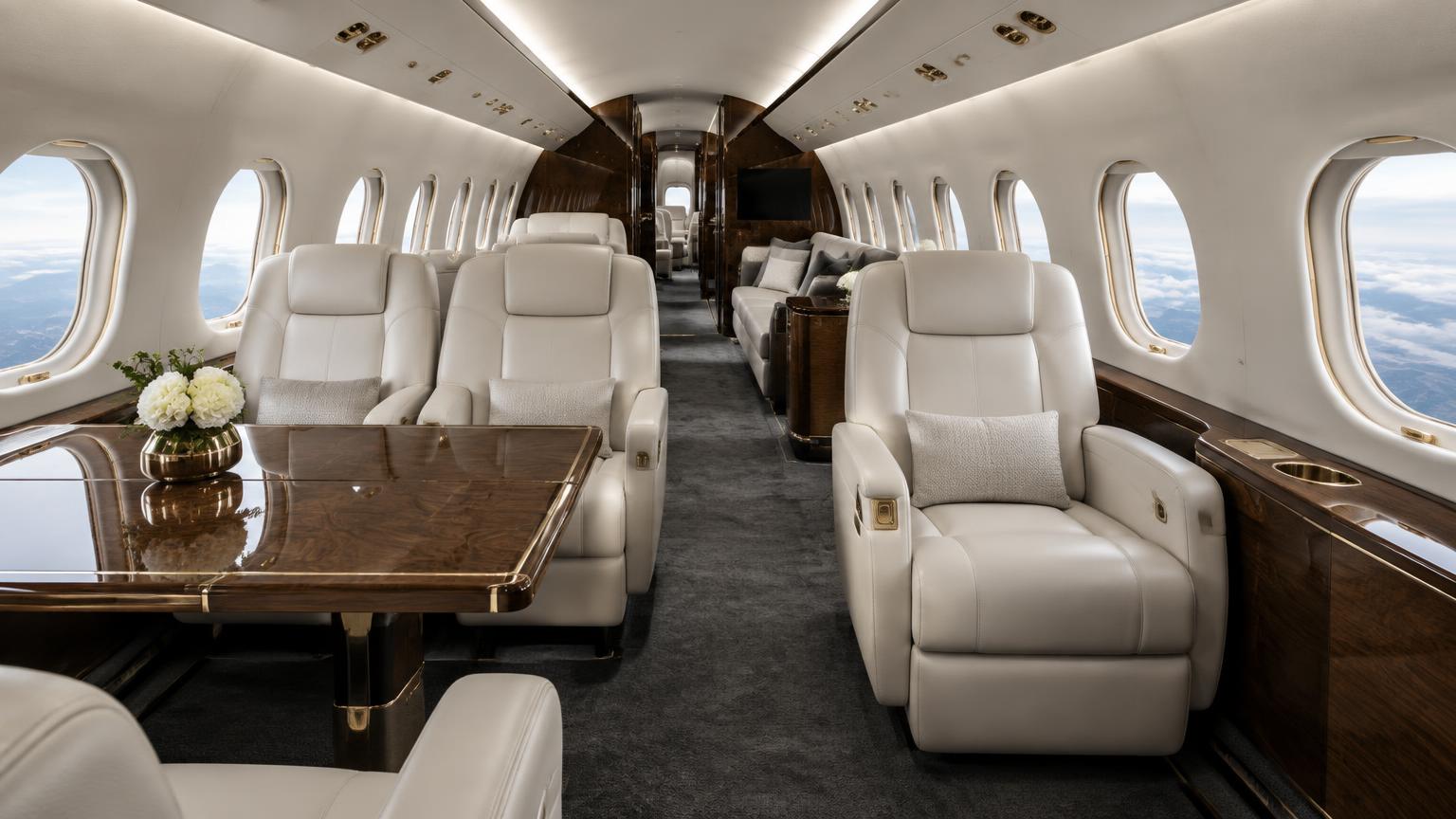
The illustrations are generated aviation imagery, not evidence of a specific aircraft or operator.
For a live itinerary, see the charter advisory guide or start a private enquiry.