Treat class labels as a starting point
Light, midsize, super-midsize, heavy and ultra-long-range describe broad market groupings. Models within a category differ in cabin dimensions, certified performance and interior configuration. Two aircraft carrying the same class label can be very different places to spend a long flight.
Published maximum range is not a guarantee for your itinerary. Payload, winds, weather, reserve requirements and runway conditions influence operational planning. The operator must assess the actual flight. A broker should distinguish a brochure capability from a confirmed mission.
Light jets: a deliberate, compact choice
For shorter journeys and a modest travelling party, a light jet can be a sensible fit. The compact cabin deserves attention if passengers need to work together, if tall travellers require comfort, or if large luggage is involved.
Do not infer baggage capacity from passenger seats. Golf bags, skis, bulky cases and equipment need to be described in advance, preferably with dimensions. Lavatory arrangements and cabin access also vary. A careful recommendation answers those details before celebrating efficiency.
Midsize and super-midsize: more room to shape the mission
These categories often offer a broader balance of cabin space and mission capability than smaller jets, but they are not interchangeable. Confirm whether the actual cabin suits meetings, dining or rest and whether the proposed route is nonstop under expected conditions.
A fuel stop can be an acceptable compromise on one trip and a poor one on another. Discuss it explicitly: where the stop would be, the likely effect on the schedule and what happens if the operational plan changes. Comfort should be assessed over the whole journey, not just the airborne sector.
Heavy and ultra-long-range: capability with context
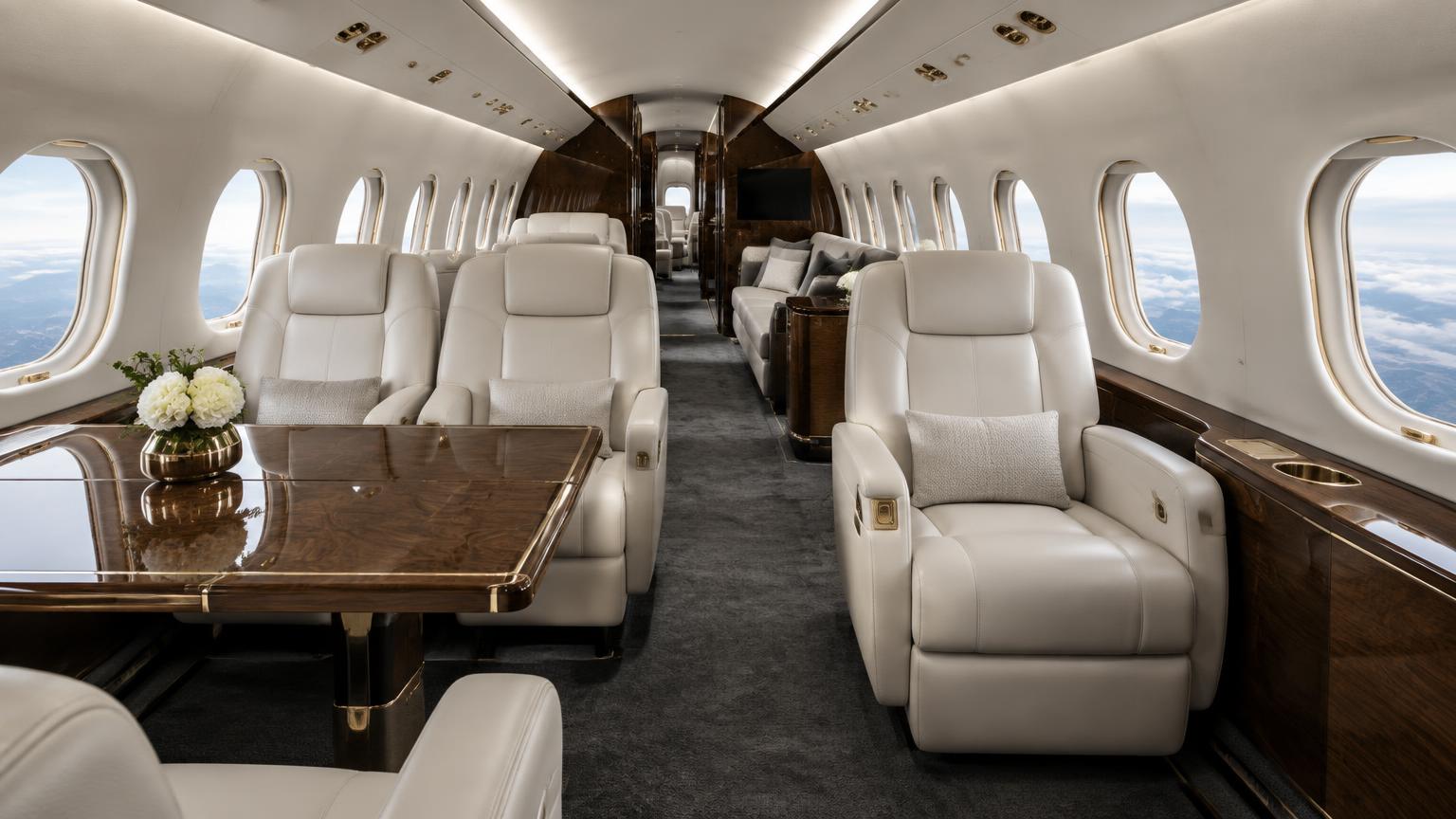
Larger cabins and longer-range designs can make demanding journeys more practical. They may offer separate cabin zones or sleeping arrangements, depending on the aircraft. An advertised seat is not necessarily a suitable bed, and a cabin photograph does not establish the precise configuration being offered.
More aircraft is not always more useful. Airport suitability, positioning, party size and the actual itinerary remain decisive. Request a cabin plan, baggage confirmation and mission-specific operator assessment rather than choosing by prestige alone.
- Confirm the actual model, configuration and operator.
- Check seat count and sleeping arrangements separately.
- Provide passenger and baggage details before accepting feasibility.
- Ask whether a fuel stop is planned or might become necessary.
- Use current manufacturer material for specifications, not generic class averages.
Sources & editorial notes
Written by Dr. Christoph Lymbersky as an authored perspective drawing on the public sources below. Sources reviewed 9 October 2026. General editorial guidance, not an individual operating, legal, tax or investment recommendation. Scenarios are labelled illustrative and do not describe real clients. No market-wide prices, statistics or guaranteed aircraft performance are asserted.
- NBAA — Jet Aircraft ↗
Context for business jet capabilities. Actual performance must be checked against manufacturer documentation and operator flight planning.
- FAA — Thinking of Chartering an Aircraft? ↗
US consumer guidance on identifying legitimate charter operators and checking operational authority.
The illustrations are generated aviation imagery, not evidence of a specific aircraft or operator.
For a live itinerary, see the charter advisory guide or start a private enquiry.