The labels are not standardised
The industry does not agree where midsize ends. Duncan Aviation’s Business Jet Model/Market Summary, current as of July 2026, places everything from the Citation XLS+ to the Challenger 3500 and Praetor 600 on a single midsize list. The Jet Supply European Private Jet Charter Price Index, Q3 2026 splits the same territory three ways: the Citation XLS+ sits with the PC-24 as a “super light jet”, the Learjet 60XR and Hawker 900XP are midsize, and the Challenger 350, Praetor 600 and Gulfstream G280 are super midsize. Avi-Go’s 2025 annual report counts the Challenger 350 among midsize jets — second globally in that category, with 153,840 departures and a 15.54% share.
So when a quote says “super-midsize”, I read the model and the registration, not the class. In this note I use three tiers: classic midsize types such as the Citation XLS+, Learjet 60XR and Hawker 800XP/900XP; the newer stand-up midsize cabins, such as the Citation Latitude and Praetor 500; and super-midsize proper — Challenger 350/3500, Praetor 600, Citation Longitude and Gulfstream G280. Where a source groups them differently, I say so.
What the step up buys: cabin, range and baggage
Duncan’s July 2026 summary, prepared with Conklin & de Decker and Vref, lists cabin dimensions, typical seating, baggage volume and NBAA IFR range with all seats full. Selected models, from the classic midsize upwards (Duncan Aviation):
- Citation XLS+: cabin 18.5 ft long, 5.5 ft wide, 5.7 ft high; 422 cu ft; 90 cu ft baggage; typically 8 seats; 1,528 nm seats-full range.
- Citation Latitude: 21.75 × 6.42 × 6.0 ft; 587 cu ft; 127 cu ft baggage; 9 seats; 2,455 nm.
- Embraer Praetor 500: 24 × 6.83 × 6.0 ft; 705 cu ft; 190 cu ft baggage; 7 seats; 3,109 nm.
- Challenger 350: 23.7 × 7.17 × 6.08 ft; 930 cu ft; 106 cu ft baggage; 9 seats; 3,277 nm.
- Citation Longitude: 25.17 × 6.42 × 6.0 ft; 755 cu ft; 112 cu ft baggage; 8 seats; 3,365 nm.
- Embraer Praetor 600: 27.5 × 6.83 × 6.0 ft; 823 cu ft; 155 cu ft baggage; 8 seats; 3,745 nm.
Reading the ladder
The jumps are clear. By my own arithmetic from those figures, the Latitude offers about 39% more cabin volume than the XLS+, a cabin most passengers can stand in (6.0 ft against 5.7 ft) and roughly 60% more seats-full range. The Challenger 350 then adds width — 7.17 ft against 6.42 ft — and about 58% more cabin volume than the Latitude. Width is what you notice on a three-hour sector: whether two people can pass in the aisle, and how far a seat reclines before it intrudes on the next passenger.
Baggage does not scale neatly with class. The Praetor 500 lists 190 cu ft of total baggage volume — more than the Challenger 350’s 106 cu ft. If the trip involves skis, golf bags or a week’s luggage for six, the baggage line matters more than the class name. And a seats-full NBAA IFR range is a reference figure under stated assumptions, not a promise for your load, winds and airports; see range and reserve margins and luggage, cabin and runway.
What it costs to operate
The same summary estimates total variable cost per hour — fuel at $5.69 per gallon and routine maintenance, with major inspections excluded: Citation XLS+ $3,815; Citation Latitude $4,681; Praetor 500 $4,769; Praetor 600 $5,139; Citation Longitude $5,200; Gulfstream G280 $5,259; Challenger 350 and Challenger 3500 $5,421 each (Duncan Aviation, July 2026).
By my arithmetic, moving from an XLS+ to a Latitude adds about 23% in variable cost per hour, and from a Latitude to a Challenger 350 about 16%. These are owners’ variable costs, not charter prices: they leave out crew, insurance, hangarage, capital and the operator’s margin. They do show the shape of the premium. Fuel has also moved since those assumptions were set — US full-service Jet A averaged $8.36 per gallon in September 2026, according to General Aviation News — a point I develop in my note on used private jet prices.
What it costs to charter in Europe
For European charter, the Jet Supply index for Q3 2026 — compiled from brokerage quoting data on 66 priced aircraft — gives all-in bands per block hour: super light jets (PC-24, Citation XLS+) €6,400–€9,900, mid-band €8,150; midsize (Learjet 60XR, Hawker 900XP) €8,600–€13,200, mid-band €10,900; super midsize (Challenger 350, Praetor 600, G280) €8,900–€15,300, mid-band €12,100. Heavy jets start at €12,200.
Two things stand out to me. First, the bands overlap heavily: a well-positioned super-midsize can price below a poorly positioned midsize. Second, the mid-band gap between midsize and super midsize in that index is about 11% — small relative to the difference in cabin. North America shows a wider step: Private Jet Card Comparisons put published jet card averages at the end of Q3 2026 at $9,607 per hour for midsize and $12,485 for super-midsize, about 30% more. Different market, different product; I cite it only to show that the premium is not a fixed number.
Jet Supply’s lane benchmarks put London to Mykonos (3h 31m block) on a super midsize from €38,000 all-in, and London to Dubai (7h 05m) from €77,000. Those are indicative from-prices, and a live quote still moves with date, availability and positioning.
Empty legs follow the same fleet. In Limitless Sky’s June 2026 working sample, midsize and super-midsize types featured prominently among the ten most-listed aircraft: Learjet 60XR (16 legs), Challenger 300 (14), Citation X (14), Citation XLS+ (11) and Hawker 900XP (9). That is a sample, not an industry index — see Limitless Sky empty legs and empty-leg economics.
Where these aircraft fly in Europe
Europe is a light-jet market, as I set out in why light jets do most of Europe’s private flying. Midsize jets, in Avi-Go’s grouping, were 18.4% of European movements in January–August 2025 (71,848 flights) and 18.96% of European departures in June 2026 (10,730 of 56,579).
Within that slice, a few types do much of the work. The Challenger 300 series (300/350/3500) was Europe’s third most active model in January–August 2025, with 22,874 movements and a 5.85% share; the Citation Latitude ranked fourth, with 17,461 movements (4.46%). The Praetor 600 was Europe’s fastest-growing model in that window, up 40.15% from 5,609 to 7,861 movements, and across full-year 2025 it was the second-fastest-growing model by absolute flights, adding 3,266 (+42.99%).
Utilisation is where the Latitude stands out. In Avi-Go’s June 2026 rankings it was Europe’s most-utilised model, at 66.72% across a 61-aircraft cohort, and second by average monthly flight hours, at 88.25 hours per aircraft. The Challenger 300 series had the larger European cohort — 149 aircraft, at 38.48%. Globally, the Latitude led 2025 utilisation at a 52.2% active rate, with 466 average flights per aircraft. A busy fleet cuts both ways for a charter client: it tells you operators find the type commercially useful, and it means the best-positioned examples are often already committed in peak weeks.
When I recommend the step up
I favour a super-midsize cabin when the mission, not the image, asks for it:
- Longer sectors with a full cabin, where a classic midsize’s seats-full range — about 1,500 nm for the XLS+ in Duncan’s figures — leaves little margin.
- Working or resting on board. A wider, stand-up cabin changes a three-hour flight far more than a fifty-minute one.
- Six or more passengers with real luggage. Check the baggage volume line, not the class name.
- Long single sectors, where seats-full ranges of roughly 3,300–3,750 nm (Challenger 350, Citation Longitude, Praetor 600 in Duncan’s figures) can remove a fuel stop — subject to the operator’s flight plan for your load, winds and airports.
- Peak dates when the right super-midsize is already positioned nearby. Because the European bands overlap, the larger cabin can be the sensible price, not merely the comfortable one.
When I keep clients in a midsize — or smaller
Charter enquiries I take are fulfilled through Limitless Sky; the aircraft comparison comes first, and it often points down a class rather than up.
- Short European hops. Jet Supply’s index assumes a 1.5-hour minimum billed block time, and under ninety minutes the larger cabin rarely changes the journey.
- Small parties with modest baggage, where an XLS+ or a Latitude does the job comfortably.
- Airports where performance is tight. There the operator’s figures for the specific type decide, not its class.
- Price-sensitive trips. Quote the same itinerary in both classes; a cabin difference you will not use is not value.
My view, briefly
The step from midsize to super-midsize is one of the most negotiable decisions in private aviation, precisely because the labels are loose and the price bands overlap. I do not recommend a class; I recommend a cabin for a mission, and then I price specific aircraft. On a short European sector I would rather see a well-kept Latitude or XLS+ already in position than a Challenger flown in empty to collect you. On a four-hour sector with six passengers and their luggage, the wider cabin usually earns its premium.
Frequently asked questions
What is the difference between a midsize and a super-midsize jet? — There is no single standard. Broadly, super-midsize types such as the Challenger 350, Praetor 600, Citation Longitude and Gulfstream G280 offer wider or longer stand-up cabins and seats-full ranges above 3,200 nm in Duncan Aviation’s figures, against roughly 1,500 nm for a classic midsize such as the Citation XLS+.
How much more does a super-midsize jet cost to charter in Europe? — In the Jet Supply Q3 2026 index, super midsize jets run €8,900–€15,300 per block hour all-in (mid-band €12,100), against €8,600–€13,200 for midsize (mid-band €10,900). The bands overlap; positioning often decides which is cheaper for a given trip.
Which super-midsize jet flies most in Europe? — In Avi-Go’s January–August 2025 data, the Challenger 300 series (300/350/3500), with 22,874 European movements and a 5.85% share — the third most active model overall.
Is the Citation Latitude midsize or super-midsize? — It depends who is classifying. Duncan Aviation lists it on its midsize summary; Avi-Go’s June 2026 utilisation data groups it with the Longitude in a super-midsize cohort. Its cabin — 6.0 ft high and 6.42 ft wide in Duncan’s figures — sits between the classic midsize and the widest super-midsize cabins.
When is a super-midsize jet worth it? — On longer sectors, with larger parties and more baggage, or when you need to work or rest on board. On short European hops, a midsize or light jet is usually the better fit.
Planning a specific journey? Live charter enquiries are handled by Limitless Sky, where the operator, aircraft and terms for your itinerary can be discussed.
Sources & editorial notes
Written by Dr. Christoph Lymbersky as an authored perspective drawing on the public sources below. Sources reviewed 13 October 2026. General editorial guidance, not an individual operating, legal, tax or investment recommendation. Scenarios are labelled illustrative and do not describe real clients. No market-wide prices, statistics or guaranteed aircraft performance are asserted.
- Duncan Aviation — Business Jet Model/Market Summary ↗
Vref value ranges and variable cost per hour by model. Values are indicative, not appraisals.
- Jet Supply — European Private Jet Charter Price Index Q3 2026 ↗
Brokerage all-in European block-hour bands from quoting data on 66 priced aircraft; indicative from-prices, not a live quote.
- Private Jet Card Comparisons — Q3 2026 jet card prices ↗
Industry tracking of jet card pricing in Q3 2026.
- Avi-Go — 2025 Annual Business Aviation Report (RD200) ↗
Flight-tracking research on business jet departures, countries, airports and aircraft in 2025.
- Avi-Go — Research & Consulting ↗
Avi-Go periodic market research, including January–August 2025 and 2026 monthly European data.
- General Aviation News — Aviation fuel prices, September 2026 ↗
Report on the September 2026 rise in aviation fuel prices.
- Limitless Sky — Empty Legs ↗
Limitless Sky empty-leg working sample data.
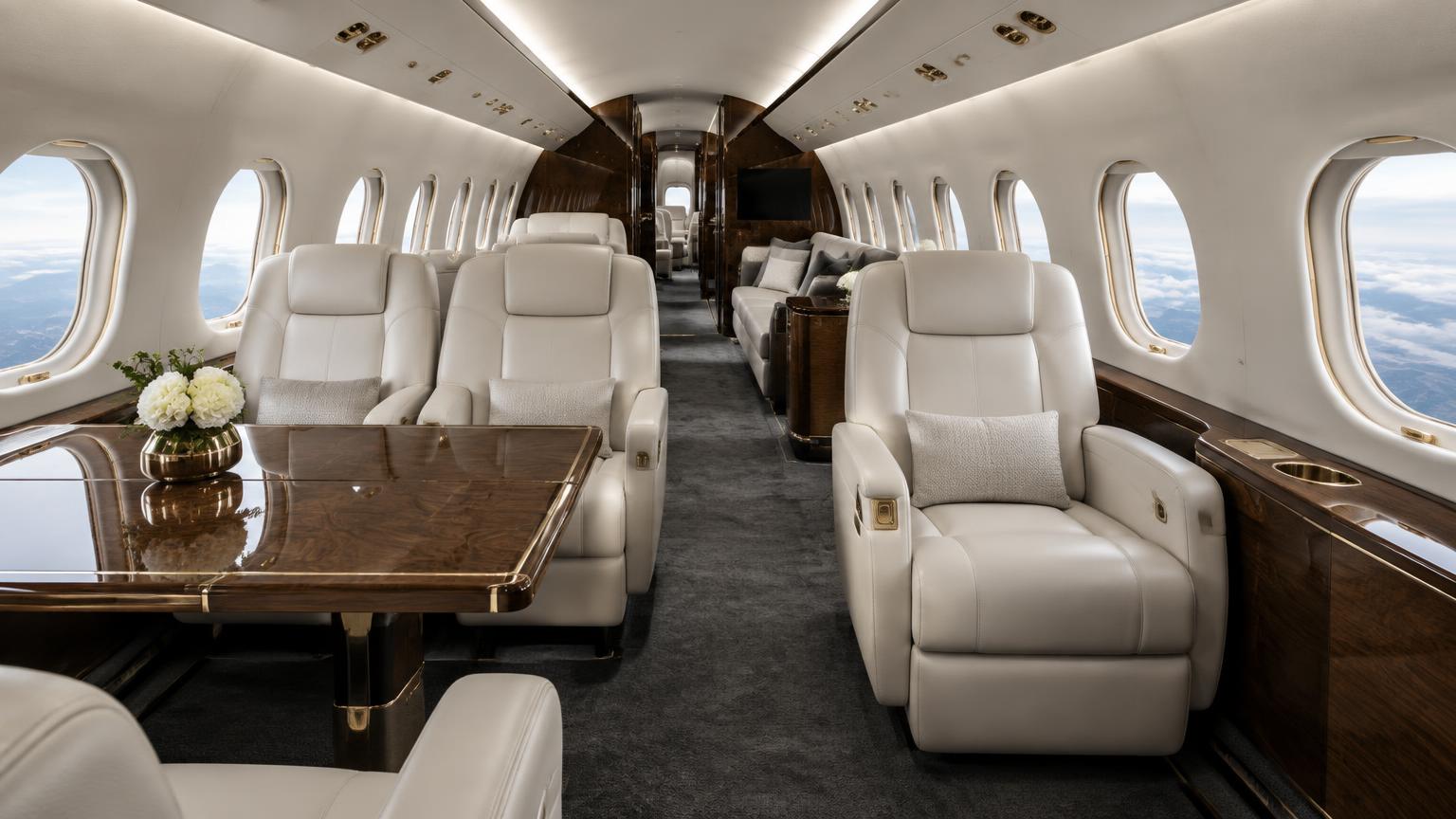
The illustrations are generated aviation imagery, not evidence of a specific aircraft or operator.
For a live itinerary, see the charter advisory guide or start a private enquiry.