Why the Challenger 350 is the reference point
Scale explains most of it. Bombardier delivered its 1,000th super-midsize jet, a Challenger 3500, in February 2025, and the Challenger 300, 350 and 3500 are three generations of the same type. The Challenger 350 itself was produced from 2014 to 2022; about 428 of the 431 built remain in service. Avi-Go counts 153,840 Challenger 350 departures worldwide in 2025.
In Europe the family is just as visible. Avi-Go puts the Challenger 300 series (300, 350 and 3500) at 22,874 European movements between January and August 2025, third among all models with a 5.85% share. In June 2026 the family logged 3,808 flights in Europe, more than half of all Bombardier flights there (50.82%), and its 149 European aircraft ranked ninth by utilisation, at 38.48%. Even on a short corridor such as London to Paris it took 6.95% of movements between January and August 2025, second only to the Phenom 300. For me as a broker, that depth matters as much as any specification: when an aircraft goes technical the day before a trip, the larger the fleet, the better the chance of a like-for-like replacement nearby.
What the aircraft is
The Challenger 350 is an upgraded Challenger 300. Bombardier launched it at EBACE in Geneva in May 2013, with NetJets as worldwide launch partner, and Transport Canada certified it in June 2014. The changes were new Honeywell HTF7350 engines of 7,323 lbf each, canted winglets and a direct climb to 43,000 ft, plus a new cabin with larger windows. Aviation Week notes that the maximum take-off weight rose from 38,850 lb on the Challenger 300 to 40,600 lb.
Its successor, the Challenger 3500, was announced in September 2021 and entered service in September 2022. Transport Canada treats it as a marketing designation of the same BD-100-1A10 type, with a lower cabin altitude, an autothrottle and cabin updates. The certified type, engines and weights are the same, which is why I treat a late Challenger 350 and an early 3500 as close relatives rather than different aircraft.
Range: reading 3,200 nm properly
Bombardier’s figure is 3,200 nm with eight passengers, two crew, NBAA IFR reserves and ISA conditions. For the 3500, Bombardier quotes 3,400 nm, but with four passengers, an ISA+15°C take-off temperature and Mach 0.77, which is a different basis rather than a longer-legged aircraft. Duncan Aviation’s October 2026 summary, prepared with Conklin & de Decker and Vref, gives both the 350 and the 3500 an NBAA IFR range of 3,277 nm with all seats full, against 3,745 nm for the Praetor 600, 3,379 nm for the Gulfstream G280 and 3,365 nm for the Citation Longitude.
Here is what that means from Europe, using great-circle distances by my own arithmetic. These are illustrative paper figures with no winds and no routing, not client trips:
- Farnborough to Teterboro (New York): about 2,990 nm. Inside the seats-full figure, with roughly 290 nm to spare on paper.
- Paris Le Bourget to Teterboro: about 3,150 nm. Only about 130 nm of paper margin, which a westbound winter wind can erase.
- Geneva to Teterboro: about 3,350 nm, and Munich to Teterboro about 3,500 nm. Both are beyond the seats-full figure; plan a fuel stop, or look at a Praetor 600 or a larger jet.
- Farnborough to Dubai: about 2,980 nm; Geneva to Dubai about 2,660 nm. Comfortably within range on paper.
The winter caveat
Westbound headwinds over the North Atlantic, a heavy baggage load, a hot departure or a distant alternate each take miles out of the margin. Duncan lists 1,907 lb of payload with full fuel, so on a long sector the operator may also be trading passengers or bags against fuel. I do not quote a transatlantic sector as nonstop until the operator has planned it that way for the date and the load; the method is in realistic range and reserve margins. In practice, the Challenger 350 is a confident London–New York aircraft and a cautious one from the Alps or southern Germany.
Cabin and baggage
This is the aircraft’s strongest argument. Aviation Week gives the cabin as 6 ft high, 7 ft 2 in wide and 25 ft 2 in long, and Bombardier launched the 350 claiming a flat floor and the widest cabin in its class. Duncan’s widths support that: 7.17 ft for the Challenger 350, 7.16 ft for the G280, 6.83 ft for the Praetor 600 and 6.42 ft for the Longitude. With eight adults on a five-hour sector, those inches are the difference between a cabin that feels like a room and one that feels like a corridor.
Layouts are either eight seats in a double club or nine with a club forward and a three-place divan; most buyers choose the divan. Baggage is 106 cu ft, accessible in flight, but smaller than the Praetor 600’s 155 cu ft. If the luggage list includes skis and golf bags for six, I check it against the hold before I check anything else. One candid detail for long flights: Aviation Week notes that the Challenger 350 is the only super-midsize jet that does not offer a vacuum toilet.
Not every Challenger 350 is the same
Over eight years of production, the 350 changed in ways a quote does not show. These are the serial-number details I ask an operator about:
- Cabin altitude. Transport Canada records that the maximum cabin altitude was reduced from 7,850 ft to 5,850 ft at 45,000 ft from serial number 20887, a change that cannot be retrofitted. Late 350s are therefore noticeably more comfortable on long sectors than early ones; the 3500 goes further, to 4,850 ft at 41,000 ft.
- Autothrottle. It is factory-fitted from serial number 20937, available by service bulletin on 20875 to 20936, and not available on earlier aircraft. Aviation Week notes that 350s with autothrottle command a price premium.
- Steep approach and London City. The Challenger 350’s steep-approach capability was evaluated in 2018 for approach angles of 4.5° to 5.5°, but approval is per operator and per aircraft. London City’s official list currently shows the Challenger 350 approved for five operators and the Challenger 3500 for one. For a London City departure I ask for the operator’s approval first; the alternatives are in London private jet airports.
- Connectivity. The fit varies by aircraft: Aviation Week mentions Gogo Avance L5 air-to-ground and an FAA- and EASA-approved Viasat Ka-band option. I ask what is fitted and whether it works on the client’s route, rather than assuming Wi-Fi.
What it costs to charter in Europe
Jet Supply’s European Private Jet Charter Price Index, Q4 2026 names the Challenger 350 in its super-midsize class, at €8,900 to €15,300 per block hour, with a mid-band of €12,100, all-in. Its route benchmarks include London to Mykonos (3h 31m) on a super midsize from €38,000 and London to Dubai (7h 05m) from €77,000, one way for the whole aircraft. In my experience the spread inside the band comes from positioning, dates and the operator, not from the type, which is why the same Challenger can be quoted very differently for the same day.
What it costs to own
Duncan estimates total variable cost at $5,421 per hour for the Challenger 350, against $5,139 for the Praetor 600, $5,200 for the Longitude and $5,259 for the G280, at a fuel price of $5.69 per gallon, with routine maintenance and excluding major inspections. Fuel burn is 280 gallons per hour, against 254 for the Praetor 600. The aircraft has a long-standing reputation for low operating cost; Aviation Week’s fair summary is that it is frequently seen as having the lowest direct operating costs in its class, but not by much. On Duncan’s current figures it is slightly above its main rivals, so I would not buy one for that reason alone.
Maintenance is predictable: inspections every 600 hours or 24 months, with heavy checks at 48 and 96 months, and the engines are maintained on condition and well supported by Honeywell’s Maintenance Service Plan.
Used values: a tight market
Pre-owned Challenger 350s are scarce. Aviation Week reported in May 2026 a Bluebook retail range of $15.5 million to $19.5 million, as few as seven aircraft on the market and an average time on market of about 100 days, for an aircraft that sold new for $26 million to $27 million. Duncan’s October 2026 summary gives a Vref range of $15.23 million to $20.75 million for 2014–2022 aircraft, against $22.98 million to $29.5 million for the Challenger 3500.
Inventory does move. In September 2023, listings reached an all-time high of 15, still only 3.5% of the in-service fleet. For a buyer, the serial-number points above are where value hides: a late, autothrottle-equipped aircraft with the lower cabin altitude is worth more than an early one, and should be. For the broader picture, see what used private jets are really worth.
Challenger 350 or Praetor 600: how I choose
Both are excellent, and the right one is usually the one already in position with a strong operator. When I do have a choice, these are my rules of thumb:
- Eight adults, a long day and people who value space: the Challenger 350, for its cabin width.
- Long sectors from continental Europe with every seat full: the Praetor 600, with about 470 nm more seats-full range in Duncan’s figures. See the Praetor 600 through a broker’s eyes.
- Heavy luggage: the Praetor 600, with 155 cu ft against 106 cu ft.
- Short notice or a replacement aircraft: the Challenger 350, simply because there are more of them flying in Europe.
- Europe-only trips of two hours or less: often neither. A midsize may do the job for less; see midsize versus super-midsize jets.
My view, briefly
The Challenger 350 is not the longest-legged, the fastest or the newest super-midsize, and it does not claim to be. What it offers is the widest cabin in its class, if only just, a vast and well-supported fleet, and running costs close to the best. For most European clients who need more than a light jet, it is the sensible default, and the aircraft I measure the alternatives against. My only insistence is that the quote names the serial number, so we know which Challenger 350 we are actually getting.
Frequently asked questions
What is the range of a Challenger 350? — Bombardier quotes 3,200 nm with eight passengers and NBAA IFR reserves; Duncan Aviation’s October 2026 summary gives 3,277 nm with all seats full. Winds, payload and airports decide any specific flight.
How many passengers does a Challenger 350 seat? — Eight in a double-club layout or nine with a three-place divan; the divan layout is the more common.
Can a Challenger 350 fly nonstop from Europe to New York? — From London, yes on paper (Farnborough to Teterboro is about 2,990 nm). From Paris the margin is thin, and from Geneva or Munich (about 3,350 and 3,500 nm) it is beyond the seats-full figure, so plan a stop or choose a longer-range aircraft.
How much does it cost to charter a Challenger 350 in Europe? — Jet Supply’s Q4 2026 index puts its class at €8,900 to €15,300 per block hour (mid-band €12,100), with London to Mykonos from €38,000 and London to Dubai from €77,000, one way.
What is the difference between the Challenger 350 and the 3500? — The same airframe and engines; the 3500 adds a lower cabin altitude (4,850 ft at 41,000 ft), a standard autothrottle and a redesigned cabin. Late Challenger 350s already have the lower 5,850 ft cabin altitude and, from serial 20937, an autothrottle.
How much is a used Challenger 350? — Aviation Week reported a Bluebook retail range of $15.5 to $19.5 million in May 2026; Duncan’s October 2026 Vref range is $15.23 to $20.75 million.
Planning a specific journey? Live charter enquiries are handled by Limitless Sky, where the operator, aircraft and terms for your itinerary can be discussed.
Sources & editorial notes
Written by Dr. Christoph Lymbersky as an authored perspective drawing on the public sources below. Sources reviewed 24 October 2026. General editorial guidance, not an individual operating, legal, tax or investment recommendation. Scenarios are labelled illustrative and do not describe real clients. No market-wide prices, statistics or guaranteed aircraft performance are asserted.
- Bombardier — Bombardier Launches Challenger 350 Jet (EBACE, Geneva, 20 May 2013) ↗
Launch with NetJets as worldwide launch partner; Honeywell HTF7350 engines of 7,323 lbf; canted winglets; eight passengers 3,200 nm; direct climb to 43,000 ft; flat floor and, in Bombardier’s words, the widest cabin in its class.
- Aviation Week — Aircraft Overview: Bombardier Challenger 300 / 350 / 3500 ↗
BD-100-1A10 type history (Challenger 350 announced 20 May 2013, certified 11 June 2014; Challenger 3500 announced 14 September 2021, in service 20 September 2022); cabin 6 ft high, 7 ft 2 in wide, 25 ft 2 in long; 106 cu ft baggage; 3,200 nm range with eight passengers; 3,400 nm for the 3500 with four; 4,835 ft take-off distance; 3500 cabin altitude 4,850 ft at 41,000 ft.
- Transport Canada Civil Aviation — Operational Evaluation Report, Bombardier CL30 (Challenger 300/350), Revision 3 (24 December 2025) ↗
Challenger 3500 as a marketing designation of the BD-100-1A10; maximum cabin altitude reduced from 7,850 ft to 5,850 ft at 45,000 ft from S/N 20887, not retrofittable; autothrottle from S/N 20937 (service bulletin for S/N 20875–20936, not available at S/N 20874 and below); steep approach landing (4.5°–5.5°) evaluated in 2018.
- Duncan Aviation — Business Jet Model/Market Summary ↗
Vref value ranges and variable cost per hour by model. Values are indicative, not appraisals.
- Avi-Go — 2025 Annual Business Aviation Report (RD200) ↗
Flight-tracking research on business jet departures, countries, airports and aircraft in 2025.
- Avi-Go — Research & Consulting ↗
Avi-Go periodic market research, including January–August 2025 and 2026 monthly European data.
- Jet Supply — European Private Jet Charter Price Index Q4 2026 (October 2026) ↗
Q4 2026 edition carries forward the Q3 bands: all-in per block hour, light jet €4,700–7,500 (mid-band €6,100), super midsize €8,900–15,300 (€12,100), ultra long range €14,300–22,500 (€18,400); 1.5-hour billing minimum; London–Paris 52-minute block from €8,300; excludes de-icing, special catering and peak-date surcharges.
- Aviation Week — 20/Twenty: Bombardier’s Challenger Is A Champ (18 May 2026) ↗
More than 1,000 Challenger 300-series jets delivered since 2003; Challenger 350 produced 2014–22, about 428 of 431 still in service; Aircraft Bluebook retail range $15.5–19.5 million; as few as seven on the market, about 100 days on market; no vacuum toilet option; autothrottle premium; engines on condition under Honeywell MSP.
- Aviation Week — 20/Twenty: Demand Remains Steady For Challenger 350 (18 September 2023) ↗
Pre-owned listings peaked at 15 (3.5% of the fleet) in September 2023; 2022 factory list price $26.7 million; eight- or nine-seat layouts, most buyers choose the divan; baggage accessible in flight; Viasat Ka-band approved by FAA and EASA; inspections every 600 hours or 24 months, heavy checks at 48 and 96 months.
- Bombardier — 1,000th super-midsize aircraft delivered, a Challenger 3500 (press release, 27 February 2025) ↗
Milestone delivery of the 1,000th Bombardier super-midsize jet; Bombardier states the Challenger 3500 was the most delivered jet in its segment in 2024.
- London City Airport Private Jet Centre — Approved Operators and Aircraft ↗
Official list of aircraft types approved to land, depart and be handled at London City, by operator; Challenger 350 listed for five operators and Challenger 3500 for one (checked October 2026).
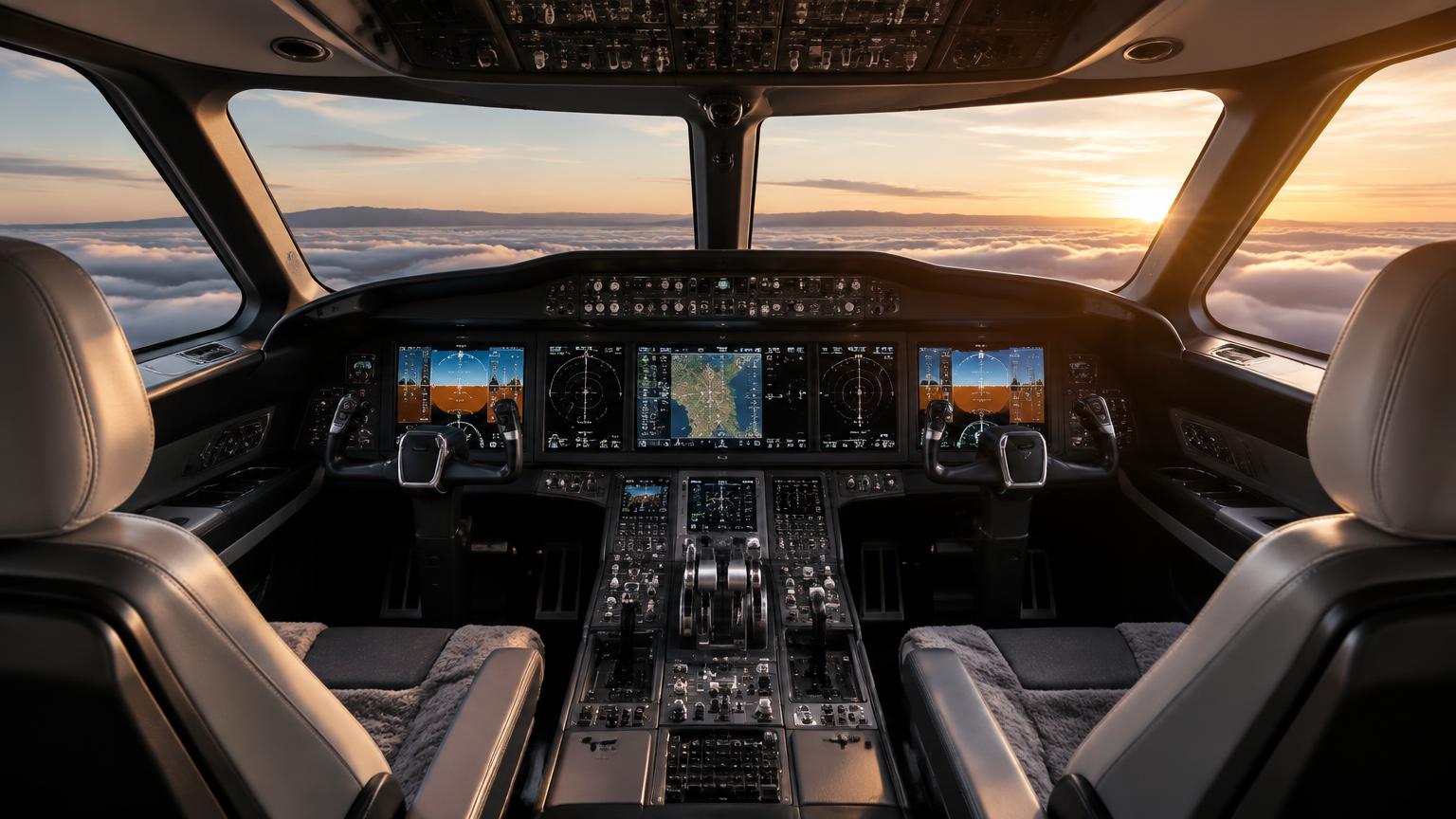
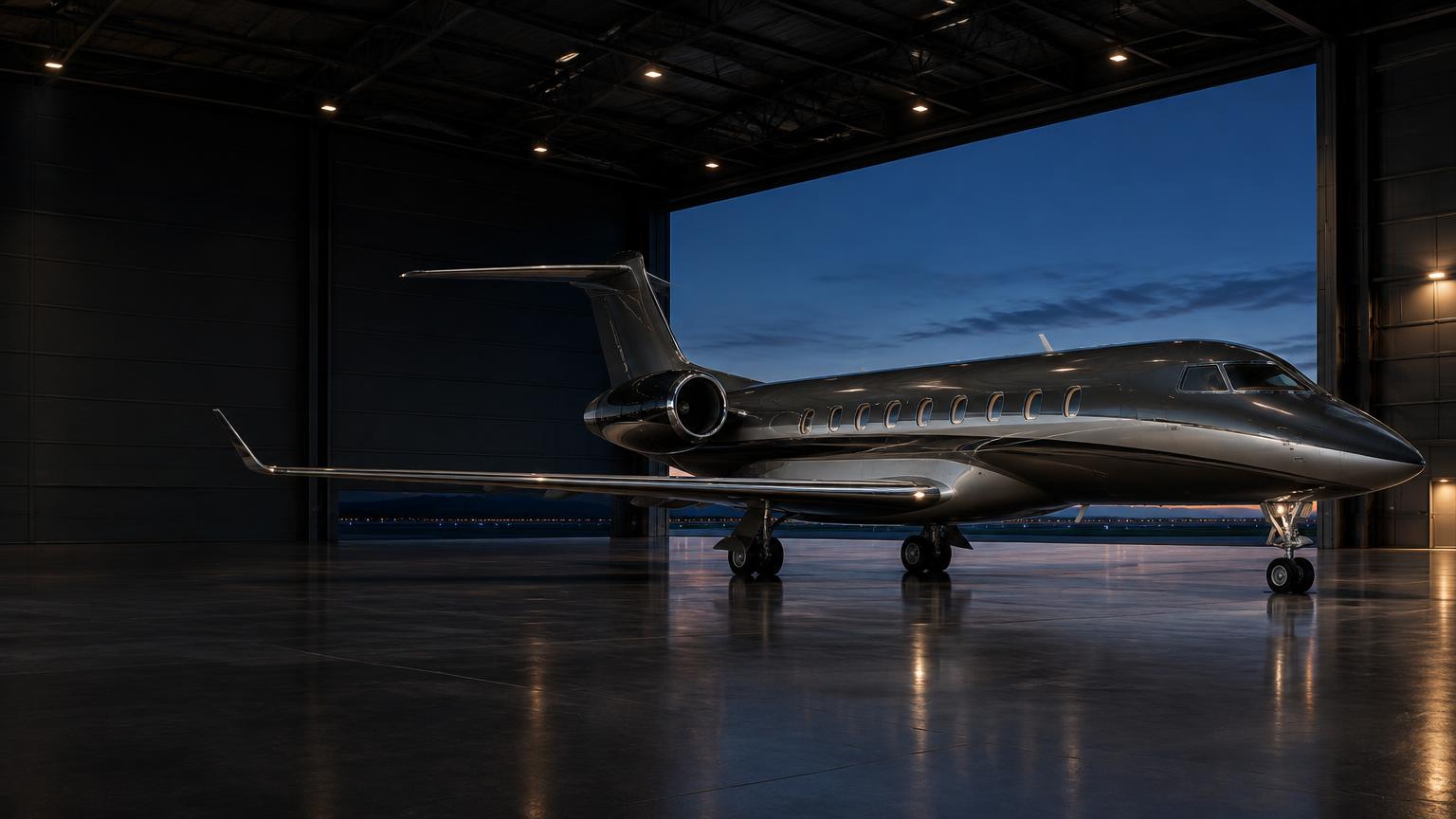
The illustrations are generated aviation imagery, not evidence of a specific aircraft or operator.
For a live itinerary, see the charter advisory guide or start a private enquiry.