Winter is Europe’s quiet season — except in the Alps
Across Europe as a whole, winter is the low season. Avi-Go put February 2025 at Europe’s seasonal trough: 34,407 business aviation movements, about 1,229 a day, against 2,169 a day in July. Its 2025 annual report shows Q3 2025 as Europe’s peak quarter, with 165,552 flights — 66% above Q1.
The Alps run against that grain. Geneva ranked third among Europe’s business aviation airports in January–August 2025, with 18,524 movements, and Geneva and Zurich together logged 32,410 movements and 3,573 active aircraft over the same months. Several mountain links grew quickly in that window. London ↔ Maloja — the Upper Engadin, served by Samedan — was Europe’s second-fastest-growing city pair, up 68.95% from 219 to 370 movements; Chambéry ↔ London rose 24.15%, from 443 to 550; and Sion was among Europe’s ten fastest-growing airports, up 10.98% to 4,428 movements. Those figures cover January to August, so they mix winter and summer traffic. I read them as a sign that Alpine demand is broad and rising, not as a ski-season count.
Season snapshots are more direct. WINGX reported that in the five weeks to 11 February 2024, Geneva saw 1,568 business jet arrivals — by my arithmetic, about 45 a day — with Sion up 6% and Annecy up 23% year on year. For the 2025–26 season, Air Charter Service reported 52% year-on-year growth in its own charters across Geneva, Sion, Gstaad and Samedan. That is one broker’s book, not a market index, but it points the same way.
The gateways, airport by airport
The choice of airport decides more about a ski trip than the choice of aircraft. Each Alpine gateway has its own winter rules. These are the points I check first, taken from the airports’ own published information:
- Geneva (LSGG). The broadest choice of aircraft and the most resilient fallback. Business and general aviation movements need prior permission: Genève Aéroport’s PPR system opens bookings five days in advance, and a handling agent is mandatory for commercial flights. On peak Saturdays the constraint is capacity, not runway.
- Sion (LSGS), for Verbier, Crans-Montana and the Zermatt valley. A 2,000 m runway, but every pilot flying IFR there must be trained and qualified for Sion’s local procedures — an approach flown at 6° initially and 4° on final. From October to March the airport opens at 07:00 UTC and closes at the end of daylight, 19:00 UTC at the latest; outside those hours prior permission is required. Air Charter Service notes that Sion offers much better slot availability than Geneva — for operators whose crews hold the qualification.
- Samedan (LSZS), for St. Moritz. At 5,600 ft, Engadin Airport describes itself as Europe’s highest-altitude airport. Its 1,840 m runway has no runway or approach lighting, there are no night operations, winter hours run from 07:00 UTC to 30 minutes after sunset, and every crew must meet the airport’s mandatory familiarisation requirements. Winter is its peak season and tarmac space is limited. Air Charter Service notes that at Samedan and Gstaad clients often charter separate aircraft in and out, with turboprops the most commonly used type.
- Chambéry (LFLB), for the Tarentaise — Courchevel, Méribel, Val d’Isère. Its winter period runs from 1 December to 30 April. Every private or commercial flight needs a PPR, allocated against both slot and parking availability; on winter weekends arrivals are limited to five an hour; overnight parking from Friday to Sunday is limited and studied case by case; there is no hangarage. Unused slots from airports sharing Chambéry’s terminal airspace are released ten days before arrival, and requests that cannot be met are transferred to Grenoble, Lyon Bron or Lyon Saint-Exupéry.
- Courchevel altiport (LFLJ). Not a jet airport. AOPA calls it Europe’s most extreme mountain runway: 1,758 ft long, with an 18.66% uphill grade, limited to day VFR, with no safe go-around once an approach is committed. For most clients the practical route is a jet to Chambéry or Geneva, then a helicopter or car.
What the charter itself costs
The flight is often the most predictable part of the bill. The Jet Supply European Private Jet Charter Price Index, Q3 2026 lists London to Geneva (1h 21m block) on a light jet from €8,300 all-in, and London to St. Moritz (1h 36m) on a super light jet from €13,000. In the same index, light jets run €4,700–€7,500 per block hour and super light jets €6,400–€9,900, with a 1.5-hour billing minimum.
By my arithmetic, the St. Moritz benchmark is about 57% above the Geneva one for roughly fifteen minutes more block time. Most of that is the class Jet Supply quotes for the lane. My own reading is that a high, unlit mountain runway with mandatory crew familiarisation narrows the choice of aircraft and crew, and the price follows the choice. The index also excludes the items that matter most in winter — de-icing and peak-date surcharges — so I treat its figures as from-prices for a quiet weekday, not for the Saturday before New Year.
Repositioning is the other winter cost. When a Saturday is full at Chambéry, or the apron at Samedan cannot hold an aircraft for the week, the jet may fly out empty and come back empty to collect you: extra sectors on the quote unless the operator can sell them. That is the core of repositioning economics, and it is why a ski-week return can price very differently from two one-ways. The same empty sectors are why empty legs cluster around the Alpine weekends; see the current Limitless Sky empty legs.
How I plan a ski-season charter
Charter enquiries I take are fulfilled through Limitless Sky. In the Alps, good planning is mostly about sequence and redundancy:
- Fix the airport before the aircraft. Sion, Samedan and Chambéry each restrict who may fly in, when, and for how long an aircraft may stay. The aircraft follows from that, not the other way round.
- Start early for peak weekends. Geneva’s PPR window opens only five days ahead, but the aircraft and crews qualified for Sion or Samedan are a narrower choice, and Chambéry’s released slots appear only ten days before arrival. For Christmas, New Year and the February weekends I secure the operator and crew first.
- Fly Friday or Sunday if you can. Chambéry’s cap of five weekend arrivals an hour is a published rule; a day either side often removes the constraint.
- Fly in the morning. Samedan’s winter hours end 30 minutes after sunset and Sion closes at the end of daylight. A late departure leaves little margin for a de-icing queue or a slot delay.
- Price a fallback airport. Chambéry itself redirects requests it cannot accommodate to Grenoble or Lyon. I quote Geneva or Zurich alongside any mountain field, so that the weather decision can be made on the day with the ground transfer already understood.
- Declare skis and boots by number and size. Ski bags do not compress; see luggage, cabin and runway. In a light jet the baggage line decides the trip more often than the seat count.
- Accept that a turboprop is sometimes the right answer. For short sectors into the smaller mountain fields, a turboprop or a light jet may be what the operator recommends — and at Samedan and Gstaad, Air Charter Service names turboprops as the most common type.
My view, briefly
The Alps reward clients who plan like operators. The charter rate for a ninety-minute sector is largely known; what is not known until it is booked is whether there is a slot, a parking stand and a qualified crew on the Saturday you want. I would rather confirm a Friday arrival into Sion or Chambéry in October than chase a Saturday at Geneva in December. And I always price the fallback, because in February the mountain decides, not the itinerary.
Frequently asked questions
Which airport is best for a private jet to the Alps? — It depends on the resort. Geneva offers the widest choice of aircraft; Sion serves Verbier, Crans-Montana and the Zermatt valley; Samedan serves St. Moritz; Chambéry serves Tarentaise resorts such as Courchevel, Méribel and Val d’Isère. Each has its own winter rules on slots, parking, hours and crew qualification.
Can a private jet land at Courchevel? — Not at the altiport. AOPA describes its runway as 1,758 ft long with an 18.66% uphill grade, limited to day VFR. The usual route is a jet to Chambéry or Geneva, then a helicopter or car.
How much does a private jet from London to the Alps cost? — Jet Supply’s Q3 2026 index lists London to Geneva on a light jet from €8,300 all-in and London to St. Moritz on a super light jet from €13,000, one way. These are indicative from-prices that exclude de-icing and peak-date surcharges; a live quote moves with date, positioning and parking.
When should I book a ski-season private jet? — As soon as the dates are firm, particularly for Christmas, New Year and the February weekends. Chambéry limits winter-weekend arrivals to five an hour, and Sion and Samedan require crews with specific local qualifications.
Why can ski-season charters cost more than the hourly rate suggests? — Repositioning, de-icing and peak-date pricing. If an aircraft cannot park at the mountain airport for the week, it may fly out and back empty, and those sectors appear on the quote.
Planning a specific journey? Live charter enquiries are handled by Limitless Sky, where the operator, aircraft and terms for your itinerary can be discussed.
Sources & editorial notes
Written by Dr. Christoph Lymbersky as an authored perspective drawing on the public sources below. Sources reviewed 14 October 2026. General editorial guidance, not an individual operating, legal, tax or investment recommendation. Scenarios are labelled illustrative and do not describe real clients. No market-wide prices, statistics or guaranteed aircraft performance are asserted.
- Jet Supply — European Private Jet Charter Price Index Q3 2026 ↗
Brokerage all-in European block-hour bands from quoting data on 66 priced aircraft; indicative from-prices, not a live quote.
- Avi-Go — Research & Consulting ↗
Avi-Go periodic market research, including January–August 2025 and 2026 monthly European data.
- Avi-Go — 2025 Annual Business Aviation Report (RD200) ↗
Flight-tracking research on business jet departures, countries, airports and aircraft in 2025.
- Genève Aéroport — PPR, air traffic coordination ↗
Airport rules for prior permission (PPR) for business and general aviation at Geneva, including booking window and handling requirements.
- Sion Airport — Pilot information ↗
Airport-published pilot information: IFR qualification requirements, runway data, winter opening hours and handling. Not for operational use; the AIP governs.
- Engadin Airport (Samedan) — Briefing Familiarization LSZS ↗
Airport briefing on mandatory crew familiarisation, runway, opening hours, winter traffic and parking at Samedan. Not for operational use; the AIP governs.
- Chambéry Savoie Mont Blanc Airport — Winter period ↗
Airport rules for 1 December–30 April: PPR allocation, weekend arrival slot limits, overnight parking and overflow airports.
- AOPA — The Courchevel Altiport (May 2025) ↗
Feature on the Courchevel altiport’s runway length, gradient and day-VFR operating limits.
- WINGX Global Market Tracker via BlueSky News — Week 6, 2024 ↗
Weekly flight-tracking report including ski-season business jet arrivals at Geneva, Chambéry, Sion and Annecy (early 2024).
- BBGA — Air Charter Service looks at the 2026 ski season in the Alps ↗
Member news (23 January 2026) with a charter broker’s own season observations; company data, not a market index.
- Limitless Sky — Empty Legs ↗
Limitless Sky empty-leg working sample data.
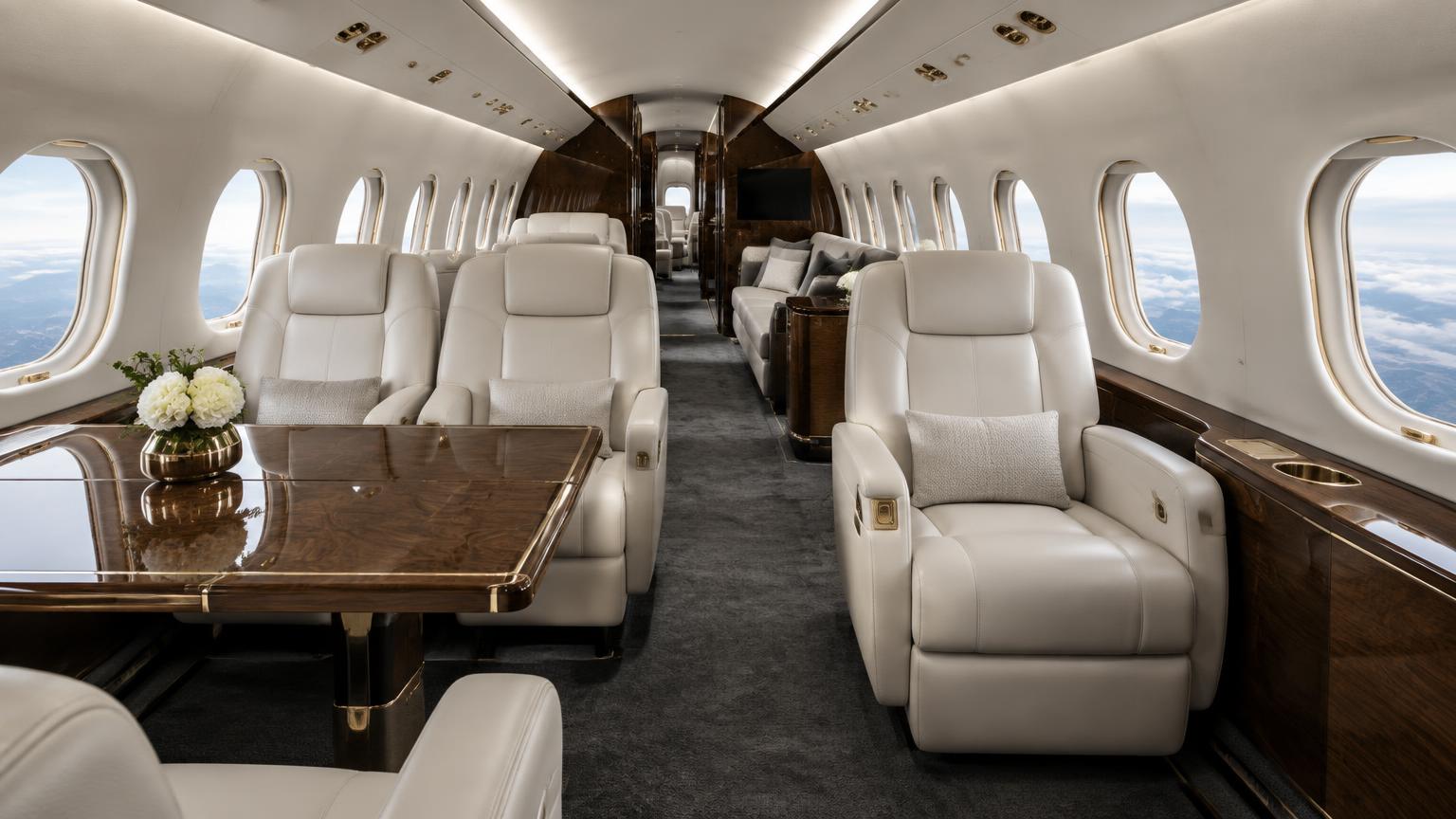
The illustrations are generated aviation imagery, not evidence of a specific aircraft or operator.
For a live itinerary, see the charter advisory guide or start a private enquiry.