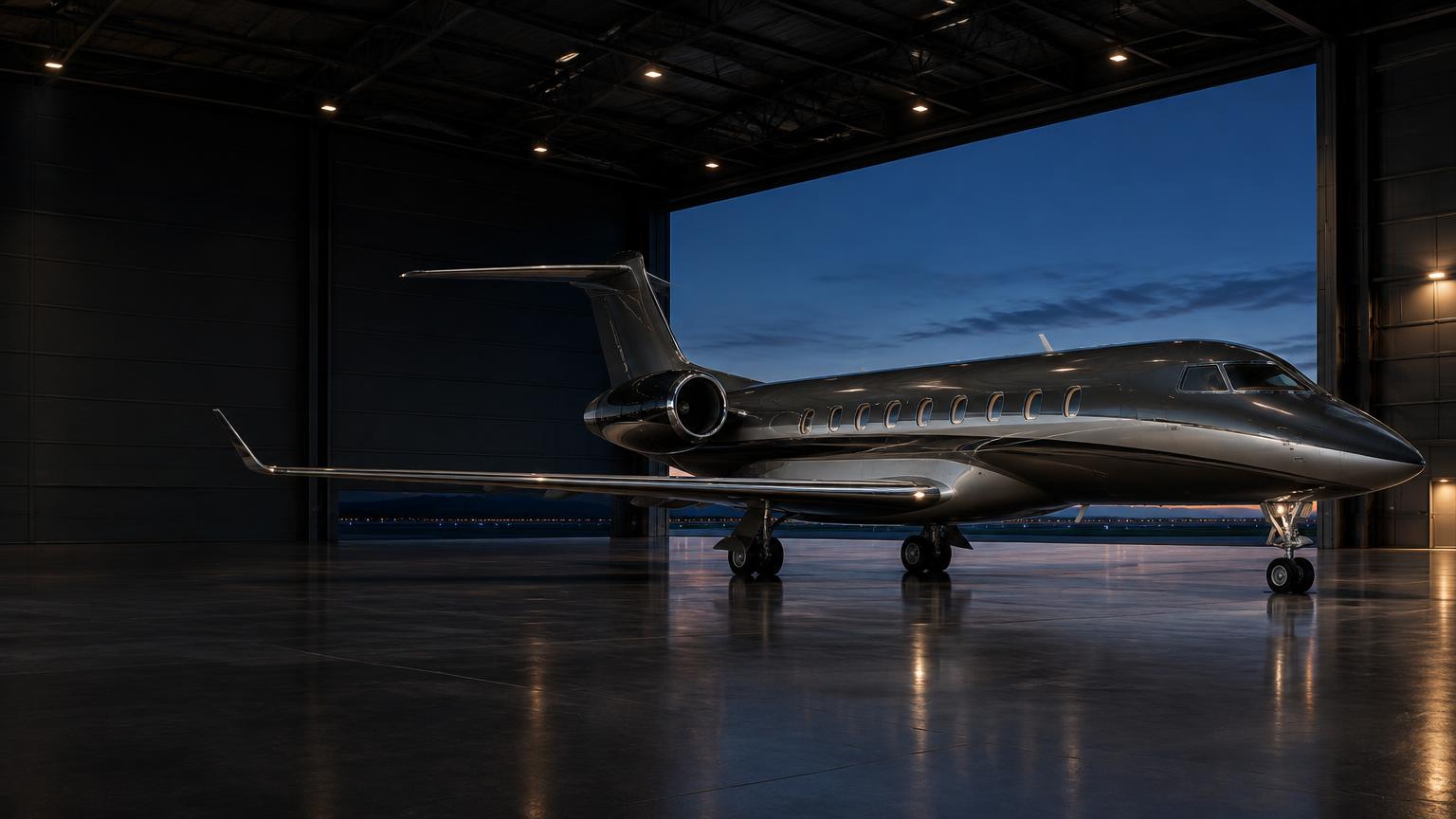
What the Longitude is
The Longitude is the flagship and the longest-range jet in Textron Aviation’s current Citation line-up, a twin that Textron sells as a super-midsize jet with a maximum range of 3,500 nm, a maximum cruise speed of 483 knots and room for up to 12 occupants. Its European type certificate records the dates that matter: FAA type certification on 21 September 2019 and EASA type certification on 12 July 2021, with a minimum crew of two and a maximum of twelve passenger seats. Duncan Aviation, in its October 2026 Model/Market Summary prepared with Conklin & de Decker and Vref, files it on its large-jet summary, beside the Challenger 350, the Gulfstream G280 and the Embraer Praetor 600. Those three are the aircraft I compare it with.
The fleet is still growing. GAMA counted 25 Longitude deliveries in 2025, against 47 Citation Latitudes, and Aviation International News reported nine Longitudes delivered in the third quarter of 2026, against five a year earlier. A young, small fleet has one practical consequence for charter clients, which I come to below: you often have to look further for one.
Range: reading 3,500 nm properly
Textron’s 3,500 nm is a maximum, not a promise with a full cabin. Duncan’s summary gives the Longitude an NBAA IFR range of 3,365 nm with all seats full and 3,510 nm as a ferry flight with no passengers. On the same basis it gives 3,277 nm for the Challenger 350, 3,379 nm for the G280 and 3,745 nm for the Praetor 600. On paper the Longitude sits in the middle of its class, a little ahead of the Challenger and well behind the Praetor.
Here is what that means from northern Europe, using great-circle distances by my own arithmetic. These are illustrative paper figures with no winds, no routing and no alternates, not client trips:
- London Luton to Teterboro (New York): about 2,990 nm. Inside the seats-full figure, with roughly 375 nm to spare on paper.
- Hamburg to Teterboro: about 3,300 nm. Roughly 60 nm of paper margin, which a westbound winter wind will consume.
- Frankfurt to Teterboro: about 3,340 nm. Almost no margin at all.
- Munich to Teterboro: about 3,500 nm. Beyond the seats-full figure; I plan a fuel stop unless the operator’s flight plan shows otherwise.
- Hamburg, Frankfurt or Munich to Dubai: about 2,460 to 2,640 nm. Comfortably inside, which is where the aircraft is strongest.
Payload: the eighth seat costs fuel
Textron publishes a full-fuel payload of 1,600 lb (726 kg) and a maximum payload of 3,200 lb (1,451 kg); Duncan’s figure for payload with maximum fuel is 1,589 lb. If I plan on 100 kg per passenger with baggage, which is my own working assumption rather than a regulatory figure, full tanks leave room for seven people. An eighth passenger, or a heavy load of ski or golf bags, means less fuel, and less fuel means less range on exactly the long sectors for which one chooses a Longitude. I explain why the brochure figure and the planning figure differ in my note on range and reserve margins.
The cabin: long rather than wide
Inside, Textron publishes a flat-floor cabin 1.83 m high, 1.96 m wide and 7.67 m long, with 112 cu ft of baggage space, accessible in flight. Duncan’s figures allow a like-for-like comparison (Duncan Aviation, October 2026):
- Citation Longitude: cabin 755 cu ft; 25.17 ft long, 6.42 ft wide, 6.0 ft high; 112 cu ft baggage; typically 8 seats.
- Challenger 350: cabin 930 cu ft; 23.7 ft long, 7.17 ft wide, 6.08 ft high; 106 cu ft baggage; typically 9 seats.
- Embraer Praetor 600: cabin 823 cu ft; 27.5 ft long, 6.83 ft wide, 6.0 ft high; 155 cu ft baggage; typically 8 seats.
- Gulfstream G280: cabin 935 cu ft; 32.25 ft long, 7.16 ft wide, 6.25 ft high; 154 cu ft baggage; typically 8 or 10 seats.
What those numbers mean on board
On Duncan’s figures the Longitude has the smallest cabin volume of the four and the narrowest cross-section, about nine inches narrower than the Challenger 350. Duncan lists exactly the same width and height for the Longitude as for the Citation Latitude; on paper the Longitude is a longer cabin on the same cross-section. Textron, for its part, markets the cabin on legroom and quiet rather than width, and claims the quietest cabin in its class and up to 11% more legroom; I have no independent measurement to set against that claim.
For a family of six or a board of four flying overnight, length matters more than width: it buys a separate seating area and room to recline. For eight adults with luggage, I look harder at the Challenger and the G280. If the Latitude is what you know, my note on the Citation Latitude covers the shorter-range sister aircraft.
Runways, weight and airport fees
Textron gives a take-off field length of 4,810 ft (1,466 m) and a landing distance of 3,170 ft (966 m). Those are the manufacturer’s headline figures. What a runway must offer on the day depends on weight, temperature, elevation and whether it is wet, and for a commercial flight the operator, not the brochure, makes that calculation.
The maximum take-off weight of 39,500 lb (17,917 kg) matters for a less obvious reason. Many European landing charges, and Germany’s air-traffic-control departure charge, are set by weight. I worked through what that means for a Longitude, against a smaller Citation, in my note on European airport fees.
What it costs to charter in Europe
Jet Supply’s European index, revised on 1 November 2026, places super-midsize jets at €6,000 to €9,000 per hour in the air, mid-band €7,500, crew and fuel included, with positioning, airport and handling fees and taxes on top. The index names the Challenger 350, Praetor 600 and G280 in that class, not the Longitude; as a super-midsize of the same generation, I would expect a Longitude to be quoted in the same band, but that is my inference. For scale, Jet Supply quotes London to Mykonos on a super-midsize from €21,000 for the flying alone, typically €37,000 to €52,000 all-in one way.
Availability matters more than the hourly band. Avi-Go’s June 2026 utilisation data covered a global cohort of 120 Longitudes, active 52.31% of the time, and a North American cohort of 116 aircraft. If those cohorts are representative, almost the whole active fleet is based in North America. In Europe a Longitude may have to position a long way to reach you, and positioning can cost more than the difference between two types. That is why I quote it alongside the Challenger 350 and the Praetor 600, never instead of them.
What it costs to run, and what Textron claims
Duncan estimates the Longitude’s total variable cost at $5,200 per hour, with fuel at $5.69 a gallon, an average burn of 284 gallons an hour, and major inspections excluded. On the same basis it puts the Challenger 350 at $5,421, the G280 at $5,259 and the Praetor 600 at $5,139. The four sit within about $300 of each other; running cost will rarely decide between them.
Textron’s own page advertises an hourly operating cost of $2,903 and the lowest direct operating costs of any super-midsize jet, along with 800-hour, 18-month maintenance intervals. The page does not set out the assumptions behind the $2,903, so it cannot be compared with Duncan’s figure; I use Duncan’s, because it applies one method to every type. Values are wide: Duncan’s Vref range for Longitudes built from 2018 runs from $17.4 million to $30.0 million. As for connectivity, in October 2026 Textron announced FAA certification of Gogo Galileo HDX low-earth-orbit connectivity for the Longitude. On a charter, ask which system the specific aircraft carries; the type tells you nothing about the tail.
Longitude, Challenger 350 or Praetor 600: how I choose
The type is a starting point; the specific aircraft, its operator and where it sits today decide. With that caveat, this is how I read the three:
- Citation Longitude: six to eight passengers on sectors up to about 3,000 nm, when one is positioned nearby, and when a long, quiet cabin matters more than width.
- Challenger 350: the widest cabin of the three, and the deepest European fleet; the Challenger 300 series was the most active super-midsize in Europe in Avi-Go’s January–August 2025 data.
- Praetor 600: when range margin and baggage decide, with 3,745 nm seats-full and 155 cu ft of baggage in Duncan’s figures.
- Whichever type: the tail number, the year of build and a fuel plan at the real passenger load, before I confirm.
My view, briefly
The Longitude is a modern, well-equipped super-midsize with a long cabin and a sensible running cost, and it reaches New York from London and Dubai from Germany’s main airports on paper. Its weaknesses are a narrower cross-section than its rivals and a thin European fleet. When one is available close to a client, I am glad to offer it; I do not ask clients to pay positioning across the Atlantic to fly in one.
Frequently asked questions
How far can a Citation Longitude fly? — Textron quotes a maximum range of 3,500 nm. Duncan Aviation gives 3,365 nm with all seats full under NBAA IFR reserves. Winds, weight and alternates reduce that on a real flight.
How many passengers does a Citation Longitude carry? — Up to twelve passenger seats under its EASA type certificate; Duncan gives eight as a typical layout. With full fuel, payload is about 1,600 lb (726 kg), which limits how many can fly the longest sectors.
Can a Citation Longitude fly non-stop from Germany to New York? — On paper Hamburg and Frankfurt to Teterboro sit just inside its seats-full range, and Munich just outside. In winter, against westbound winds, I would plan a fuel stop unless the operator’s flight plan shows a non-stop with reserves.
How much does it cost to charter a Citation Longitude in Europe? — Jet Supply’s November 2026 index puts super-midsize jets at €6,000 to €9,000 per flight hour, before positioning, fees and taxes. It does not name the Longitude, and because few are based in Europe, positioning often decides the price.
Is the Citation Longitude a super-midsize jet? — Textron calls it one, and Duncan lists it with the Challenger 350, G280 and Praetor 600. Its cabin is the narrowest of that group in Duncan’s figures, but it is a stand-up, flat-floor cabin of 1.83 m.
Planning a specific journey? Live charter enquiries are handled by Limitless Sky, where the operator, aircraft and terms for your itinerary can be discussed.
Sources & editorial notes
Written by Dr. Christoph Lymbersky as an authored perspective drawing on the public sources below. Sources reviewed 24 November 2026.
General guidance, not individual legal, tax or investment advice. Figures come from the sources below unless marked as my own calculation. Client examples are anonymized.
- Textron Aviation — Cessna Citation Longitude overview and specifications ↗
Manufacturer data (accessed 24 November 2026): maximum range 3,500 nm, maximum cruise 483 ktas, up to 12 occupants; cabin 1.83 m high, 1.96 m wide, 7.67 m long; baggage 112 cu ft (506 kg), accessible in flight; MTOW 39,500 lb (17,917 kg); full-fuel payload 1,600 lb (726 kg), maximum payload 3,200 lb (1,451 kg); take-off field length 4,810 ft (1,466 m), landing distance 3,170 ft (966 m); Textron claims an hourly operating cost of $2,903 and 800-hour, 18-month maintenance intervals.
- EASA — Type-Certificate Data Sheet EASA.IM.A.620, Textron Aviation Model 700 (Citation Longitude), Issue 03, 26 October 2021 ↗
FAA type certificate 21 September 2019; EASA type certification 12 July 2021; minimum crew of two; maximum seating fourteen (two crew plus twelve passenger seats).
- Duncan Aviation — Business Jet Model/Market Summary ↗
Vref value ranges and variable cost per hour by model. Values are indicative, not appraisals.
- Jet Supply — European Private Jet Charter Price Index Q4 2026, revised 1 November 2026 ↗
Revised bands per hour in the air for the whole aircraft, crew and fuel included, positioning, airport and handling fees and taxes excluded: midsize jet (Learjet 60XR, Hawker 900XP) €5,300–€7,000; super midsize jet (Challenger 350, Praetor 600, G280) €6,000–€9,000, mid-band €7,500; super light jet €4,000–€6,000; London–Mykonos (3h 30m, super midsize) flight only from €21,000, typical all-in €37,000–€52,000 one way; not comparable with the Q3 2026 edition.
- Avi-Go — Research & Consulting ↗
Avi-Go periodic market research, including January–August 2025 and 2026 monthly European data.
- GAMA — 2025 Year-End Aircraft Shipments and Billings Report ↗
General Aviation Manufacturers Association delivery data by manufacturer and model for 2025.
- Aviation International News — Textron Aviation Q3 Citation deliveries rise 21% as turboprop shipments dip (29 October 2026) ↗
Textron delivered 51 Citations in Q3 2026 against 42 a year earlier, including 11 Latitudes (11 in Q3 2025) and nine Longitudes (five); 128 Citations in the first nine months; 500th Latitude rolled out during the quarter.
- Textron Aviation — FAA certification of Gogo Galileo HDX for the Citation Longitude and Latitude (15 October 2026) ↗
FAA certification of Gogo Galileo HDX low-earth-orbit connectivity for the Citation Latitude and Longitude; preferred worldwide service rate guaranteed for three years; factory-new aircraft delivered from 2028 eligible for installation at no charge; Textron states the Latitude offers at least 15% lower operating costs than competing aircraft.
The illustrations are generated aviation imagery, not evidence of a specific aircraft or operator.
For a live itinerary, see the charter advisory guide or start a private enquiry.