Why the Latitude matters
Textron calls it the world’s best-selling midsize business jet, and the delivery numbers support the claim. GAMA counted 47 Citation Latitude deliveries in 2025, and in the third quarter of 2026 Textron delivered 11 Latitudes, unchanged from a year earlier, the quarter in which it also rolled out the 500th Citation Latitude from its Wichita factory.
In Europe it is not a niche type. Avi-Go’s data put the Latitude fourth among European models in January–August 2025, with 17,461 movements (4.46%), and in June 2026 it was Europe’s most-utilised model, at 66.72% across 61 aircraft, with 88.25 flight hours per aircraft that month. Globally, it led 2025 utilisation at a 52.2% active rate, with 466 average flights per aircraft. An aircraft flown that hard is one operators trust; it is also one that is often already booked.
The cabin: why people stand up and notice
The Latitude’s case begins with the floor. Textron gives the cabin as 72 in (1.83 m) high, 77 in (1.96 m) wide and 21 ft 9 in (6.63 m) long, with a flat floor and no dropped aisle. Duncan Aviation lists 587 cubic feet of cabin, 127 cubic feet of baggage and nine seats. Against the Citation XLS+, at 422 cubic feet in the same summary, that is by my arithmetic about 39% more cabin, and the difference between stooping and standing. I compare the two in more detail in my Citation XLS+ guide.
Baggage is the second argument. Textron describes external storage for up to 1,000 pounds and 100 cubic feet of luggage, with the rest of the 127 cubic feet inside the cabin. For a family with skis or golf bags, that hold often decides the aircraft before the range does.
- Cabin: 6.63 m long, 1.96 m wide, 1.83 m high, flat floor (Textron).
- Seats: up to nine (Textron); configurations vary, so ask for the seat map of the specific aircraft.
- Baggage: 127 cu ft in total, 100 cu ft in the external hold (Textron, Duncan).
- Speed: maximum cruise 446 ktas; Duncan’s normal cruise 429 ktas.
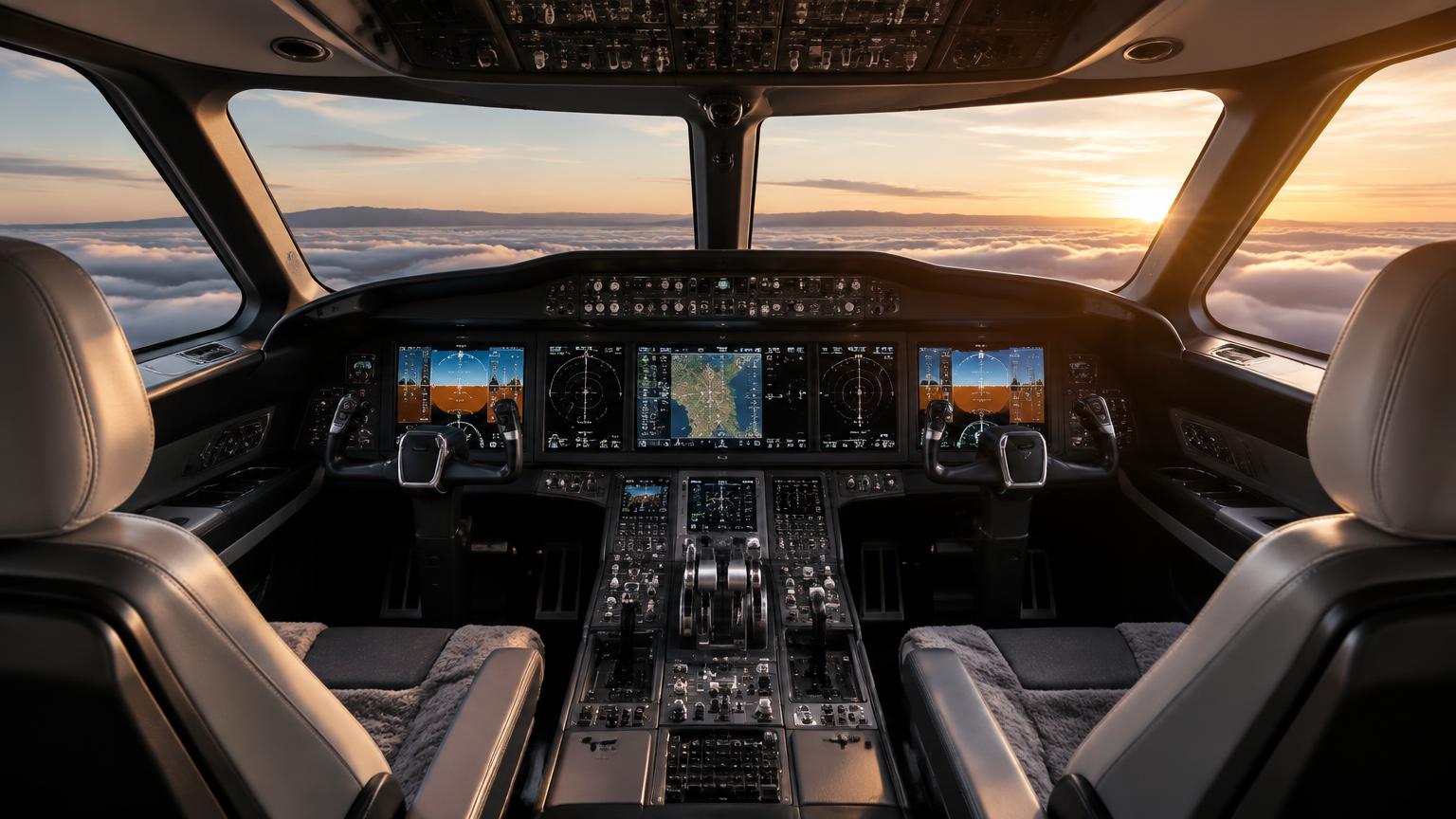
- Engines and flight deck: two Pratt & Whitney Canada PW306D1, Garmin G5000 with autothrottles (Textron).
Range: the brochure figure and the planning figure
Textron quotes a four-passenger range of 2,700 nautical miles (5,000 km) at high-speed cruise. Duncan’s planning figures are more useful for a full cabin: 2,455 nm NBAA IFR range with seats full and 2,870 nm ferry range with no passengers. The aircraft carries a full-fuel payload of 1,000 lb, so with full tanks you are trading passengers and bags against fuel.
On great-circle distances, by my arithmetic and before winds and routing: London to Tenerife is about 1,605 nm and Hamburg to Tenerife about 1,930 nm, both comfortably inside the seats-full figure; Munich to Dubai is about 2,464 nm, right on it; Geneva to Dubai about 2,656 nm, beyond the seats-full figure but inside the four-passenger one; and London to Dubai about 2,969 nm, beyond both. Textron itself cites Geneva to Dubai as a nonstop. I would plan it as one only with a light cabin and the operator’s flight plan for the day; the reasons are in realistic range and reserve margins.
Short runways and steep climbs
Textron gives a take-off field length of 3,580 ft (1,091 m) at maximum take-off weight and a landing distance of 2,480 ft (756 m), and calls the take-off figure class-leading. That matters in Europe, where the airfield closest to a client’s house or yacht is rarely the one with the longest runway.
A field-length figure is a certification number at stated conditions, not a promise for a hot afternoon on a contaminated runway. On a short or demanding airfield the operator’s performance calculation for that aircraft, that weight and that day decides, and I ask for it before I confirm the trip.
Who flies the Latitude in Europe
Much of the fleet is not on the open charter market at all. JETNET data published by AvBuyer count 492 Latitudes; of the 476 in operation, 261 are fractionally owned and 224 in whole ownership. In Europe the largest operator is NetJets Europe, which took its first Citation Latitude in 2016, from a 2012 order; PlaneLogger now lists 32 active Latitudes in the NetJets Europe fleet. Those aircraft serve share owners, not charter clients.
For a charter client, the practical consequence is depth. Avi-Go’s June 2026 European cohort was 61 aircraft, and that month they averaged close to ninety flight hours each. In peak weeks I would book a Latitude early or have a Praetor 500 or a Challenger 350 quoted alongside it. If you fly enough to consider a share, I set out the arithmetic in fractional jet ownership in Europe.
What it costs to run and to charter
Duncan Aviation estimates the Latitude’s total variable cost at $4,681 per hour, against $3,815 for the Citation XLS+, $4,769 for the Praetor 500 and $5,421 for the Challenger 350. By my arithmetic it runs about 14% cheaper per hour than a Challenger 350 and about 23% dearer than an XLS+. Textron goes further and claims at least 15% lower operating costs than competing aircraft; that is the manufacturer’s claim, not an independent figure.
Its average fuel burn is 303 gallons per hour. Using the EU’s emission factor, as I explained in private jet emissions, that is by my arithmetic about 2.9 tonnes of CO2 per hour.
On charter, Jet Supply’s revised Q4 2026 index does not name the Latitude. Its midsize band runs €5,300 to €7,000 per hour in the air and its super-midsize band, led by the Challenger 350, Praetor 600 and G280, €6,000 to €9,000, both before positioning, fees and taxes. Because the Latitude is classed differently by different sources, I ask which band a quote is built on, and I compare it with the class above and below. For a sense of a whole trip: Jet Supply puts London to Mykonos in a super-midsize at €37,000 to €52,000 one way, all-in. I explain where the Latitude sits between the classes in midsize versus super-midsize jets.
Buying one: tight supply, firm values
Duncan Aviation’s summary puts Latitude values, built from 2015 to the present, at $12.761m to $21.995m, indicative rather than an appraisal. The pre-owned market is thin. In June 2026 The Jet Agent counted 7 Citation Latitude aircraft available for sale, including 1 off-market opportunity, representing just 1.5% of the fleet, and 10 Citation Latitude aircraft have sold in the previous six months, between $12,500,000 and $16,050,000.
Connectivity is the item I would check first on a used aircraft. In October 2026 the FAA certified Gogo Galileo HDX for the Citation Latitude, a low-earth-orbit system, and Textron will install it at no charge on factory-new aircraft delivered beginning in 2028. A Latitude without global connectivity will compete on price with one that has it.
When I choose it, and when I do not
I choose the Latitude for four to seven passengers on sectors of two to four and a half hours, where a stand-up cabin and a real baggage hold make the journey better: London or Hamburg to the Canaries, the Alps with skis, the Mediterranean with luggage for a week. I look elsewhere when the group is eight or nine with full bags on a long sector, where a Challenger 350 or Praetor 600 has the margin, or on a forty-minute hop where a light jet does the job for less.
Charter enquiries I take are fulfilled through Limitless Sky. If you send me the trip, I will put a Latitude next to the aircraft either side of it, with the seats-full range, the hold and the all-in price set out, so that the choice rests on the mission rather than the label.
Frequently asked questions
How far can a Citation Latitude fly? — Textron quotes 2,700 nm with four passengers at high-speed cruise. Duncan Aviation gives 2,455 nm NBAA IFR range with all seats full. From Munich that reaches Dubai on paper, but only the operator’s flight plan on the day confirms a nonstop.
Is the Citation Latitude midsize or super-midsize? — Textron and Duncan Aviation class it as midsize; Avi-Go groups it with the Citation Longitude in a super-midsize cohort. Its 6 ft cabin height matches the super-midsizes in Duncan’s summary; its width, range and costs sit in between.
How many passengers does a Citation Latitude seat? — Up to nine, according to Textron. Configurations vary between operators, so ask for the seat map of the specific aircraft.
How much does a used Citation Latitude cost? — Duncan Aviation’s indicative values run from about $12.8m to $22.0m depending on year. In the six months to June 2026, The Jet Agent recorded sales between $12.5m and $16.05m, with only 1.5% of the fleet for sale.
Planning a specific journey? Live charter enquiries are handled by Limitless Sky, where the operator, aircraft and terms for your itinerary can be discussed.
Sources & editorial notes
Written by Dr. Christoph Lymbersky as an authored perspective drawing on the public sources below. Sources reviewed 4 November 2026.
General guidance, not individual legal, tax or investment advice. Figures come from the sources below unless marked as my own calculation. Client examples are anonymized.
- Textron Aviation — Cessna Citation Latitude overview and specifications ↗
Manufacturer data: maximum range 2,700 nm, maximum cruise 446 ktas, up to 9 occupants; take-off field length 3,580 ft (1,091 m), landing distance 2,480 ft (756 m); cabin 72 in high, 77 in wide, 21 ft 9 in long, flat floor; baggage 127 cu ft and 1,245 lb, of which an external compartment for up to 1,000 lb and 100 cu ft; full-fuel payload 1,000 lb; maximum operating altitude 45,000 ft; Pratt & Whitney Canada PW306D1 engines; Garmin G5000 with autothrottles. Not a guarantee for any individual charter flight.
- Textron Aviation — Textron Aviation Marks 500th Cessna Citation Latitude Rollout (22 September 2026) ↗
500th Citation Latitude rolled out in Wichita; described as the world’s best-selling midsize business jet; four-passenger range 2,700 nm at high-speed cruise; stand-up flat floor with 6 ft cabin height; take-off field length 3,580 ft; up to nine passengers; 446 ktas; full-fuel payload 1,000 lb.
- Textron Aviation — FAA certification of Gogo Galileo HDX for the Citation Longitude and Latitude (15 October 2026) ↗
FAA certification of Gogo Galileo HDX low-earth-orbit connectivity for the Citation Latitude and Longitude; preferred worldwide service rate guaranteed for three years; factory-new aircraft delivered from 2028 eligible for installation at no charge; Textron states the Latitude offers at least 15% lower operating costs than competing aircraft.
- Aviation International News — Textron Aviation Q3 Citation deliveries rise 21% as turboprop shipments dip (29 October 2026) ↗
Textron delivered 51 Citations in Q3 2026 against 42 a year earlier, including 11 Latitudes (11 in Q3 2025) and nine Longitudes (five); 128 Citations in the first nine months; 500th Latitude rolled out during the quarter.
- The Jet Agent — Citation Latitude Market Update, June 2026 ↗
Seven Citation Latitudes for sale, including one off-market, 1.5% of the fleet; asking prices $11.2m–$23.0m; 91 average days on market; ten sold in the previous six months (2.2% of the fleet) at $12.5m–$16.05m, averaging 165 days on market.
- AvBuyer — Cessna Citation Latitude Price Guide (JETNET market status, accessed 4 November 2026) ↗
JETNET ownership data: 492 aircraft built, manufacturing years 2014–2026, 476 in operation; of those in operation 261 fractional, 224 whole, 17 leased and 7 shared.
- PlaneLogger — NetJets Europe active Cessna 680A Citation (Latitude) fleet ↗
Lists 32 active Citation Latitudes with NetJets Europe (Portuguese CS- registrations), delivered from November 2016 to September 2025.
- FlightGlobal — NetJets Europe gears up for Citation Latitude demonstration tour (May 2016) ↗
NetJets Europe took delivery of its first Citation Latitude (CS-LAT) in 2016, from a 2012 order shared with its US sister company.
- Jet Supply — European Private Jet Charter Price Index Q4 2026, revised 1 November 2026 ↗
Revised bands per hour in the air for the whole aircraft, crew and fuel included, positioning, airport and handling fees and taxes excluded: midsize jet (Learjet 60XR, Hawker 900XP) €5,300–€7,000; super midsize jet (Challenger 350, Praetor 600, G280) €6,000–€9,000, mid-band €7,500; super light jet €4,000–€6,000; London–Mykonos (3h 30m, super midsize) flight only from €21,000, typical all-in €37,000–€52,000 one way; not comparable with the Q3 2026 edition.
- Duncan Aviation — Business Jet Model/Market Summary ↗
Vref value ranges and variable cost per hour by model. Values are indicative, not appraisals.
- Avi-Go — Research & Consulting ↗
Avi-Go periodic market research, including January–August 2025 and 2026 monthly European data.
- Avi-Go — 2025 Annual Business Aviation Report (RD200) ↗
Flight-tracking research on business jet departures, countries, airports and aircraft in 2025.
- GAMA — 2025 Year-End Aircraft Shipments and Billings Report ↗
General Aviation Manufacturers Association delivery data by manufacturer and model for 2025.
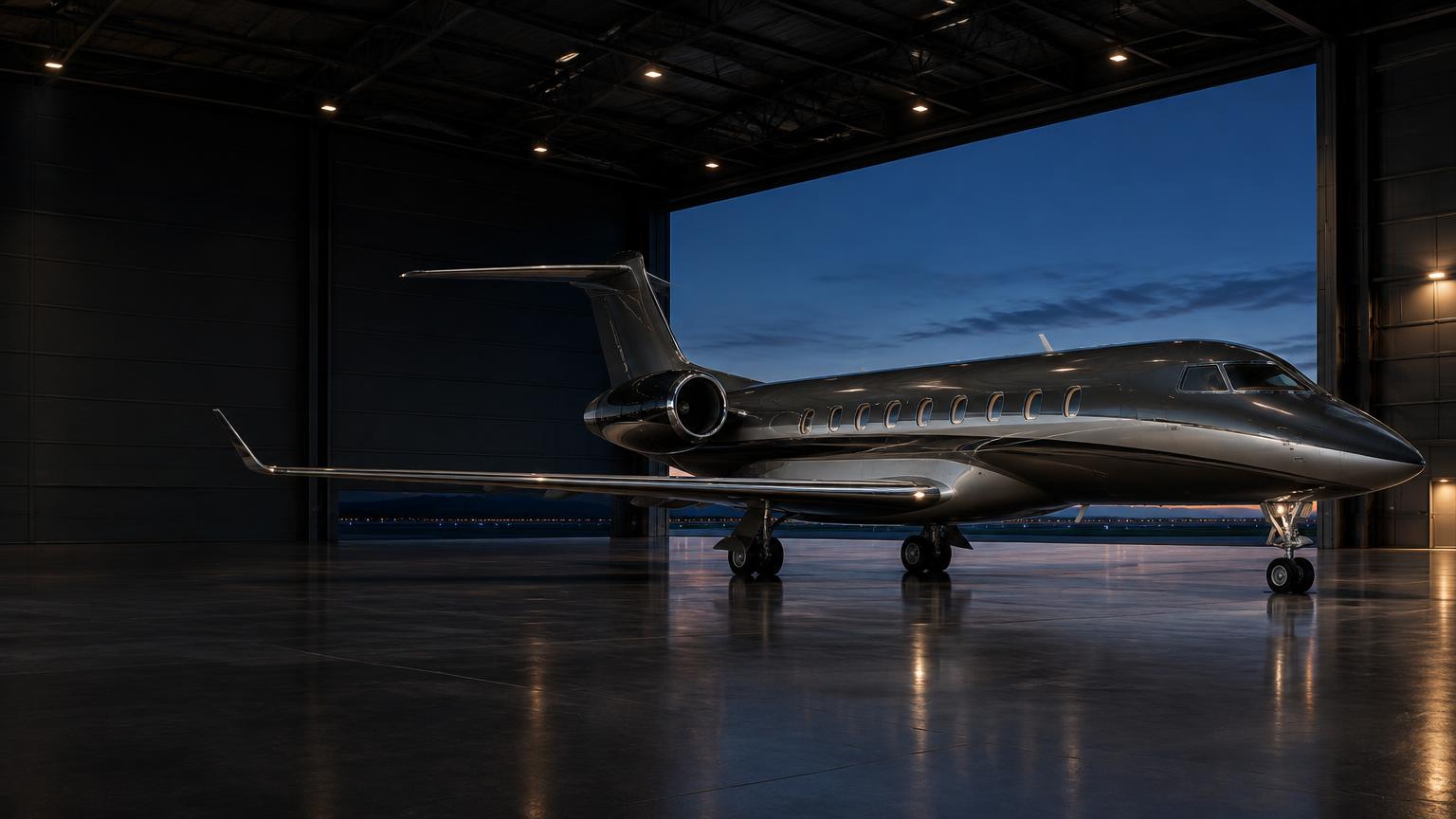
The illustrations are generated aviation imagery, not evidence of a specific aircraft or operator.
For a live itinerary, see the charter advisory guide or start a private enquiry.