What the PC-24 is — and why the label matters
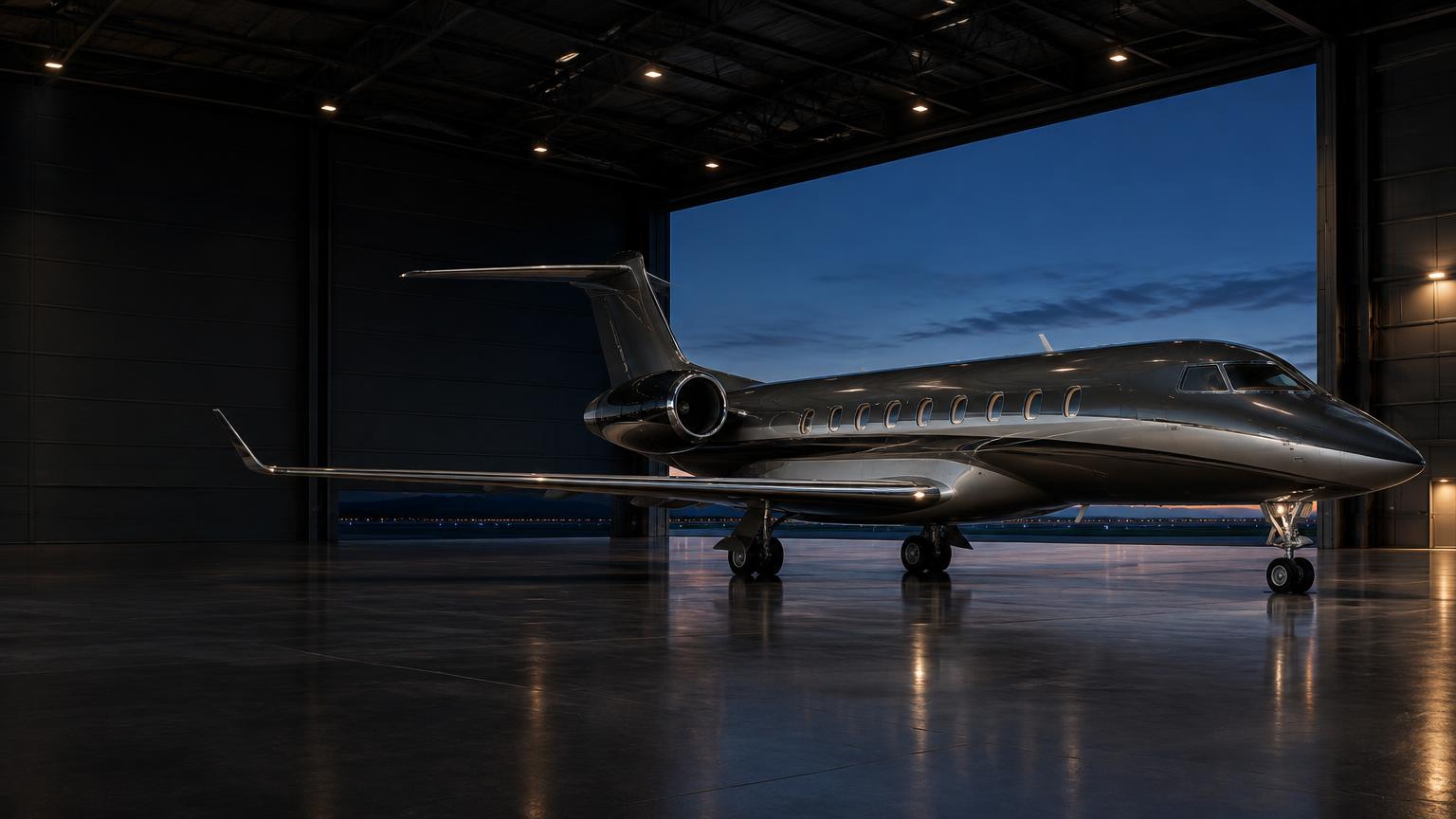
Pilatus, the Swiss manufacturer best known for the single-engine PC-12 turboprop, built the PC-24 as a twin-engine jet that keeps a turboprop’s utility. Its own fact sheet lists a maximum cruise speed of 440 knots, a maximum range of 2,000 nm with six passengers under NBAA IFR reserves, and a cockpit certified for single-pilot operation. Duncan Aviation’s Model/Market Summary, current as of October 2026 and drawing on Conklin & de Decker and Vref, files it among light jets.
Charter pricing treats it differently. The Jet Supply European Private Jet Charter Price Index, Q3 2026 places the PC-24 with the Citation XLS+ in a “super light jet” class, one step above the light-jet class of the Citation CJ3+/CJ4 and the Phenom 300. That classification is not a quibble: it sets the hourly band your quote will sit in. When I compare a PC-24 with a Phenom, I am comparing two different price classes, not two versions of the same thing.
The cabin and the door
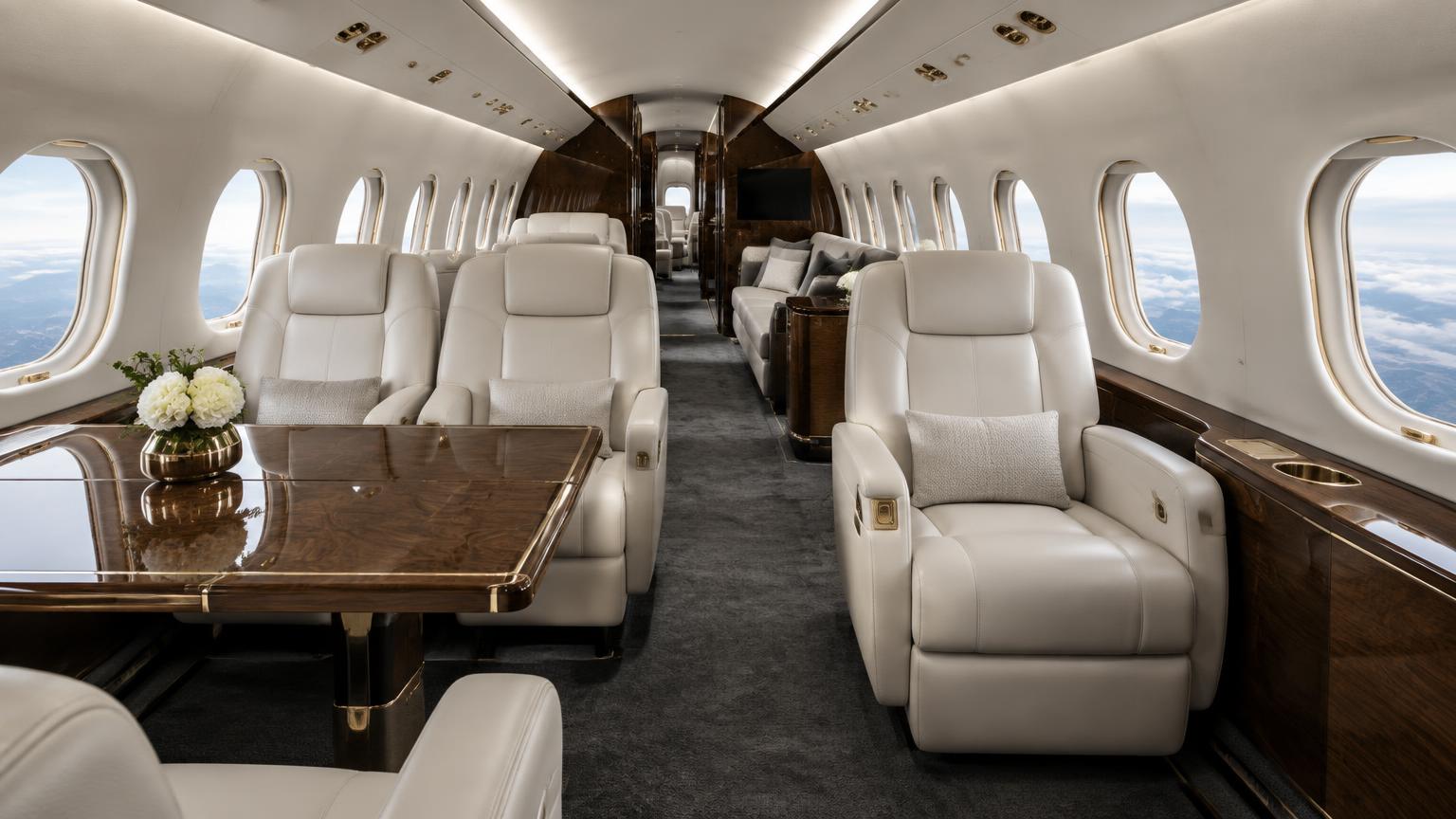
Inside, Pilatus publishes a cabin 7.02 m long, 1.69 m wide and 1.55 m high, with a continuous flat floor, and a standard aft cargo door of 1.25 m × 1.30 m opening onto a fully internal, pressurised baggage compartment of 90 cu ft. Layouts run from six executive seats to six-plus-two, and up to eleven passengers in a commuter configuration.
Duncan’s figures allow a like-for-like comparison with the PC-24’s natural rivals (Duncan Aviation, October 2026):
- Pilatus PC-24: cabin 501 cu ft; 23 ft long, 5.58 ft wide, 5.08 ft high; 90 cu ft baggage; typically 6 seats.
- Embraer Phenom 300/E: cabin 324 cu ft; 17.17 ft long, 5.08 ft wide, 4.92 ft high; 85 cu ft baggage; typically 7 seats.
- Citation CJ4: cabin 293 cu ft; 17.3 ft long, 4.83 ft wide, 4.75 ft high; 77 cu ft baggage; typically 7 seats.
Reading the comparison
By my arithmetic from those figures, the PC-24 cabin offers about 55% more volume than the Phenom 300 and about 70% more than the CJ4, and roughly six inches more width than the Phenom. Baggage volume, by contrast, is close across all three. The difference shows in the shape of what you can carry: skis, golf bags, a case of wine or a pushchair go through a door of that size without negotiation.
The cabin is still not a stand-up cabin. At around five feet high in both Pilatus’s and Duncan’s figures, most adults will stoop. If a client wants to walk upright to the lavatory, the conversation moves to the midsize cabins I covered in midsize versus super-midsize jets. And “typically six seats” is the honest working number; a commuter layout with more seats is not what a charter client should expect.
Runways: the real reason it exists
Pilatus’s published take-off distance is a balanced field length of 3,090 ft (940 m) at maximum take-off weight, sea level, ISA, on a dry paved runway, rising to 5,440 ft (1,657 m) at ISA +20 °C from an airfield at 5,000 ft. Landing distance over a 50 ft obstacle is listed at 2,410 ft (735 m). On paved runways, that is in the same territory as the Phenom 300E, for which Embraer publishes a take-off distance of 3,209 ft at MTOW, sea level, ISA. Manufacturer assumptions differ, so I treat paved-runway comparisons as broadly equal rather than a win for either.
The genuine distinction is the surface. Pilatus obtained certification for operations on dry sand and gravel in 2018; after a 2019 test campaign that included grass runways at Goodwood and Duxford in England, Kunovice in the Czech Republic and Poitiers in France, all PC-24s were cleared from February 2020 for wet and snow-covered unpaved runways. Pilatus claims that this gives the PC-24 access to almost twice as many airports worldwide as other business jets currently on the market. That is the manufacturer’s claim, not an independent count, but the certification itself is not in doubt.
For a European client, the practical value is narrower than the brochure implies. Aircraft certification is not the same as an operator’s approval to use a particular strip, and the airfield’s own rules still apply. Where it matters is the short or unusual runway close to a destination — an estate airfield, a small island strip, a mountain valley — where the alternative is a long drive or a turboprop. For alpine airports in particular, see how I plan ski-season charter and luggage, cabin and runway performance.
Range, payload and the trade-off
Range is where the PC-24 gives ground. Duncan lists NBAA IFR seats-full range of 1,525 nm for the PC-24, against 1,667 nm for the CJ4 and 1,811 nm for the Phenom 300/E. Normal cruise speeds are 440, 454 and 430 knots respectively. On a typical European sector of 90 minutes to two and a half hours, those differences rarely decide anything. On London to the Canaries or to the eastern Mediterranean with a full cabin, they can mean the difference between nonstop and a fuel stop.
Payload figures need care. Duncan lists payload with maximum fuel at 716 lb for the PC-24 and 1,361 lb for the Phenom 300/E; Pilatus’s own fact sheet quotes 1,314 lb of payload with full fuel for the current PC-24. The gap is a reminder that these figures depend on configuration, equipment and assumptions. For a full cabin with heavy bags on a longer sector, I ask the operator for the flight plan for that registration and that load — see range and reserve margins.
What it costs to own and to charter
Duncan’s October 2026 summary estimates total variable cost per hour — fuel at $5.69 per gallon plus routine maintenance, major inspections excluded — at $2,775 for the PC-24, $2,958 for the CJ4 and $3,086 for the Phenom 300/E. The PC-24 burns more fuel per hour in those figures (220 gallons against 169 for the Phenom), so the lower estimate rests on the maintenance side of the calculation. Vref value ranges in the same summary run from $8.83 million to $11.56 million for PC-24s built 2018–2024, against $5.68–$13.86 million for the Phenom 300/E and $5.08–$12.80 million for the CJ4. The PC-24’s narrower band reflects a younger fleet: there is no decade-old PC-24 to pull the bottom of the range down.
Charter is priced on a different basis. The Jet Supply Q3 2026 index gives all-in bands per block hour of €6,400–€9,900 for super light jets such as the PC-24 (mid-band €8,150), against €4,700–€7,500 for light jets such as the Phenom 300 and CJ4 (mid-band €6,100). By my arithmetic, that is about a third more at the mid-band. Indicative super-light lanes in the same index include London to St. Moritz (1h 36m block) and London to Nice (1h 42m) from €13,000 all-in, and London to Ibiza or Olbia (just over two hours) from €15,500.
Those are indicative from-prices; a live quote moves with date, availability and, above all, positioning. A PC-24 based nearby can price below a Phenom flown in empty to collect you, which is why I always quote both classes on the same itinerary.
How the PC-24 is used in Europe
Europe is where the PC-24 has found its market. Avi-Go’s 2025 annual report ranked it Europe’s fourth most active business jet model in 2025, with 29,585 flights, up 13.64% year on year; the Citation Excel/XLS/XLS+ family — its stablemate in Jet Supply’s super light class — was first, with 47,945 departures, 9.2% of European flights. Production remains modest: GAMA’s 2025 year-end report shows 50 PC-24 deliveries in 2025, against 72 for the Phenom 300 series and 30 for the Citation CJ4 Gen2.
The aircraft that exist are worked hard. In Avi-Go’s June 2026 rankings the PC-24 was Europe’s fourth most-utilised model, at 54.08% across an 83-aircraft cohort, and eighth by average monthly flight hours, at 58.37 hours per aircraft. The Phenom 300 ranked second, at 59.29% across 112 aircraft. European PC-24 flights rose from 2,850 in May 2026 to 3,303 in June (+15.89%). On Geneva–Paris in January–August 2025, the PC-24 took 7.58% of movements, behind the Falcon 2000 series (13.93%) and the Phenom 300 (12.21%).
A small, busy fleet cuts both ways for a charter client. Operators clearly find the type commercially useful; equally, in peak weeks the well-positioned PC-24 is often already committed. When a client insists on the type, I start looking earlier — and I keep a Phenom or a CJ4 alternative priced in parallel. For the wider light-jet picture, see why light jets do most of Europe’s private flying.
When I recommend the PC-24 — and when I don’t
Charter enquiries I take are fulfilled through Limitless Sky. The aircraft comparison comes first, and for the PC-24 it usually turns on four questions:
- Bulky luggage or equipment — skis, golf bags, bicycles, cases. The standard cargo door is the PC-24’s most practical advantage over a Phenom or a CJ4.
- A short, unusual or unpaved runway near the destination, where the operator holds the approvals and the airfield accepts the aircraft. This is the mission Pilatus designed it for.
- Four to six passengers on sectors of up to about two and a half hours, where the larger cabin is noticeable and the range trade-off is not.
- When I don’t: long sectors with a full cabin, where the Phenom 300’s seats-full range gives more margin; price-sensitive short hops, where a light jet’s lower band wins; and peak dates when no PC-24 is positioned nearby.
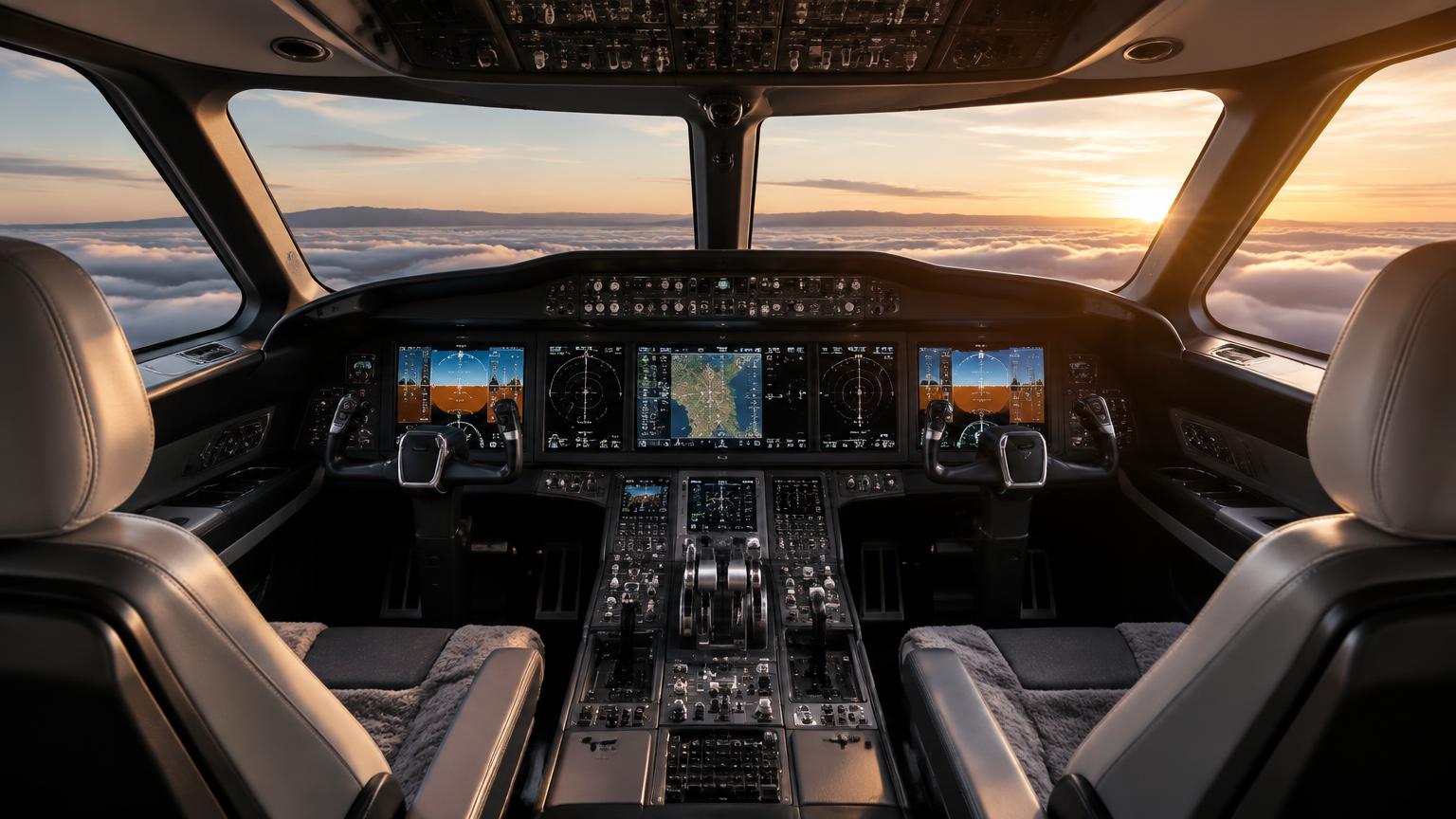
- Always ask how the aircraft is crewed. Pilatus certified the cockpit for single-pilot operation; the crewing on a charter flight is the operator’s approved procedure, and I confirm it before I recommend the aircraft.
My view, briefly
The PC-24 is the most distinctive aircraft in its bracket, and the easiest to misread. It is not a faster or longer-legged Phenom; on range it gives ground. It is a light-jet-sized aircraft with a near-midsize cabin volume, a door you can load a crate through and runway credentials no rival matches. Charter prices it a class up, and for the right mission it earns the step. For the wrong one — a full cabin to a distant sun destination, or a 50-minute hop where any good light jet will do — I would rather put a client in the aircraft that fits.
Frequently asked questions
Is the Pilatus PC-24 a light jet? — Duncan Aviation lists it among light jets; the Jet Supply European charter index places it, with the Citation XLS+, in a “super light jet” class priced above the Phenom 300 and Citation CJ4. Pilatus markets it as a “Super Versatile Jet”.
How far can a PC-24 fly? — Pilatus publishes a maximum range of 2,000 nm with six passengers under NBAA IFR reserves. Duncan Aviation lists an NBAA IFR seats-full range of 1,525 nm. Your real range depends on load, winds, temperature and airports; the operator’s flight plan decides.
Can the PC-24 land on grass or gravel? — Yes. Pilatus obtained certification for dry sand and gravel in 2018, and from February 2020 all PC-24s were cleared for wet and snow-covered unpaved runways after a test campaign that included grass. An individual charter still depends on the operator’s approvals and the airfield’s rules.
How much does it cost to charter a PC-24 in Europe? — The Jet Supply Q3 2026 index puts super light jets such as the PC-24 at €6,400–€9,900 per block hour all-in (mid-band €8,150), with London–St. Moritz and London–Nice from €13,000 one way. Positioning and dates move live quotes.
How much is a used PC-24 worth? — Duncan Aviation’s October 2026 summary gives a Vref value range of $8.83–$11.56 million for PC-24s built 2018–2024.
PC-24 or Phenom 300? — The PC-24 offers a larger cabin, a standard cargo door and unpaved-runway certification; the Phenom 300 offers more seats-full range and usually a lower charter rate. Choose on luggage, runway and sector length.
Planning a specific journey? Live charter enquiries are handled by Limitless Sky, where the operator, aircraft and terms for your itinerary can be discussed.
Sources & editorial notes
Written by Dr. Christoph Lymbersky as an authored perspective drawing on the public sources below. Sources reviewed 16 October 2026. General editorial guidance, not an individual operating, legal, tax or investment recommendation. Scenarios are labelled illustrative and do not describe real clients. No market-wide prices, statistics or guaranteed aircraft performance are asserted.
- Pilatus — PC-24 Just The Facts (2026) ↗
Manufacturer fact sheet: cabin and cargo-door dimensions, range, cruise speed, take-off and landing distances and payload under stated assumptions. Not for operational use.
- Pilatus — PC-24 rough field certification campaign concluded (media release, 7 February 2020) ↗
Manufacturer release on PC-24 certification for unpaved runways: dry sand and gravel (2018), then grass, wet earth and snow-covered surfaces (2020).
- Duncan Aviation — Business Jet Model/Market Summary ↗
Vref value ranges and variable cost per hour by model. Values are indicative, not appraisals.
- Jet Supply — European Private Jet Charter Price Index Q3 2026 ↗
Brokerage all-in European block-hour bands from quoting data on 66 priced aircraft; indicative from-prices, not a live quote.
- Avi-Go — 2025 Annual Business Aviation Report (RD200) ↗
Flight-tracking research on business jet departures, countries, airports and aircraft in 2025.
- Avi-Go — Research & Consulting ↗
Avi-Go periodic market research, including January–August 2025 and 2026 monthly European data.
- GAMA — 2025 Year-End Aircraft Shipments and Billings Report ↗
General Aviation Manufacturers Association delivery data by manufacturer and model for 2025.
- Embraer — Phenom 300E brochure (2025) ↗
Manufacturer performance under stated assumptions (range, speed, takeoff distance, seating). Not a guarantee for any individual charter flight.
The illustrations are generated aviation imagery, not evidence of a specific aircraft or operator.
For a live itinerary, see the charter advisory guide or start a private enquiry.